

Six Month Smiles for Crooked Front Teeth: A Timeline
If crooked or crowded front teeth have you wondering about a straighter smile, but two years of metal braces feels like a nonstarter, you are in the right place. Six Month Smiles is a short-term cosmetic orthodontic option focused on straightening the front teeth, rather than moving every tooth in your mouth. For adults who only want a more even smile, it can offer a cosmetic-first path with a shorter timeline. This post is not another bracket versus aligner debate. Instead, we will follow the real patient journey, stage by stage. You will learn how to decide if short-term orthodontics is right for your front teeth, what happens at the consult and exam, how a digital scan shapes your treatment plan, what the first two weeks feel like, and what changes during the middle months. We will also cover the finish line, the retainer that protects your result, common questions, and how to choose a cosmetic dentist close to home, including care in Pike Creek, Wilmington, Hockessin, Newark, and Greenville, DE. Cost, insurance, and financing are on the list too. Ready for the next step? Call 302-239-0410 or book at pikecreekdental.com/appointments for an exam and personal advice.
Is Short Term Orthodontics Right for Your Front Teeth?
Short term orthodontics suits adults whose front teeth are crowded, spaced, or have shifted over time. The goal is cosmetic alignment of the teeth people see when you smile, not repositioning every tooth or changing how your back teeth meet.
A significant bite problem, missing back teeth, active gum disease, or jaw joint symptoms may call for a fuller orthodontic or restorative plan instead. Your dentist will explain why in plain language before anything starts.
Gum health comes first. Teeth move through the bone and gum tissue holding them, so inflamed gums need attention before alignment begins. Total Health Dentistry looks for root causes and treats gum inflammation as part of whole body health.
A supervised exam matters, too. Custom aligners sold directly to consumers skip the exam, X-rays, and the professional check on whether your teeth and gums can handle movement, and the FDA has warned about aligners sold without a dentist’s supervision.
Timelines are targets, not promises: it depends on how far your teeth must move and how your body responds.
One note on the name: Six Month Smiles is a short term system for front teeth. Which system fits your teeth is something your dentist confirms at the exam, and Six Month Smiles vs. Clear Aligners: Which Fits You? covers the comparison.
Stage 1: The Consult and Exam
Your first visit is information gathering, not a pitch. We examine your teeth and gums, review your history, and take photos so you see what your dentist sees. If the same two or three teeth have annoyed you for years, mention it; that detail shapes the plan.
Expect questions about sensitivity, grinding, previous crowns or bonding, medications, and any wedding or job interview you want to work around. None of it is a trap; it just helps the plan fit your life.
A CBCT 3D scan may show roots and bone in three dimensions, and DIAGNOdent helps find cavities that are hard to see. Imaging is chosen case by case, following ADA imaging guidance, the same staged thinking behind our dental implant process in Wilmington, DE.
Then comes the conversation our doctors are known for: your options, what each involves, how long each takes, and what happens if you wait.
Early and evening appointment times mean a consult rarely costs a half day, and our office is a short drive from Pike Creek, Hockessin, Newark, Greenville and Landenberg, PA.
Stage 2: The Digital Scan and Your Treatment Plan
Then comes the scan. No goopy impression trays here. 3Shape TRIOS digital scanning uses a small handheld wand that glides across your teeth and builds a detailed 3D model on screen. Many patients tell us it is odd for a moment, then unremarkable.
Your own teeth appear on the monitor, crowding included, with an on-screen preview of where they would end up. That is usually when patients stop wondering whether it will work and start asking about dates.
Six Month Smiles is a short-term system; clear tray systems like Invisalign and ClearCorrect use removable trays. Your dentist explains which approach fits your teeth. Both are options in our office, which also handles bridges, dentures and implants.
Before anything is bonded or worn, you get a written estimate of cost and how your insurance applies. Cost depends on the treatment and your plan, so we do not quote numbers without your details.
Planning on a scan beats planning on a hunch: teeth can be repositioned digitally and reviewed with you first, so the trade-offs and realistic movement are clear before treatment starts.
Stage 3: Getting Started and the First Two Weeks
With brackets and a wire, you come in for a bonding appointment. Tooth-colored brackets go on the front teeth, a light wire threads through them, and you leave with wax, a care sheet, and a floss-threader demonstration.
With clear trays, we fit the first one in the office, show you how to insert and remove it, and explain your wear hours. You leave with cleaning instructions for tray and teeth. Wear time drives how closely your result matches the plan.
Expect pressure and tenderness for a few days as teeth start moving, plus some adjustment in your lips, cheeks, or tongue. Soft foods help; ask your dentist which over-the-counter options suit you. We don’t promise a painless course, but most adults call it manageable.
Most patients are back on calls the same week. Trays can cause a slight lisp for a little while at first; reading aloud at home helps. If your job involves a lot of speaking, tell us. Our First Time Visit Expectations cover the rest.
Skip tray hours, missed visits, pen chewing, and very hard or sticky foods. Small habits add up.
Stage 4: The Middle Months and What Changes
From here, the adult cosmetic orthodontics process settles into a rhythm of steady changes.
With brackets and a wire, short visits every few weeks put gentle pressure back on the teeth. With trays, you switch to a new set on the schedule your dentist sets, checking in periodically so progress stays on track.
Each visit, your dentist checks whether teeth are tracking as planned, whether the appliance fits well, how your gums look, and whether your home care is keeping up. A small tweak or a fresh set of aligners is normal, not a setback.
You will see change in the mirror long before the end, usually teeth rotating into line first, then small gaps closing. We take photos along the way so it is documented, not just felt.
Brush more often than usual, use interdental brushes or floss threaders where the appliance traps plaque, and keep your regular cleanings. Gum inflammation is easier to prevent than to reverse.
As we said earlier, your finish date is a target, not a promise.
Stage 5: Reaching the Finish Line
When your front teeth sit where your plan intended, the finish is quick. Brackets and wire come off in one appointment; with trays, you simply wear your last one. For many adults, it is the first time in years they have seen their front teeth in a straight line with nothing on them.
Before you leave, your dentist checks that your bite still meets comfortably, that your gums look calm, and that no bonding material remains on the tooth surfaces. Those small polish steps change how smooth the teeth feel against your tongue.
If color, shape, or a small chip still bothers you, whitening, bonding, or veneers can refine it, all offered in our office. No pressure, just a conversation.
Either way, we take a final digital scan to build your retainers. That is why retention gets planned before treatment ends, not after.
The Retainer That Protects the Result
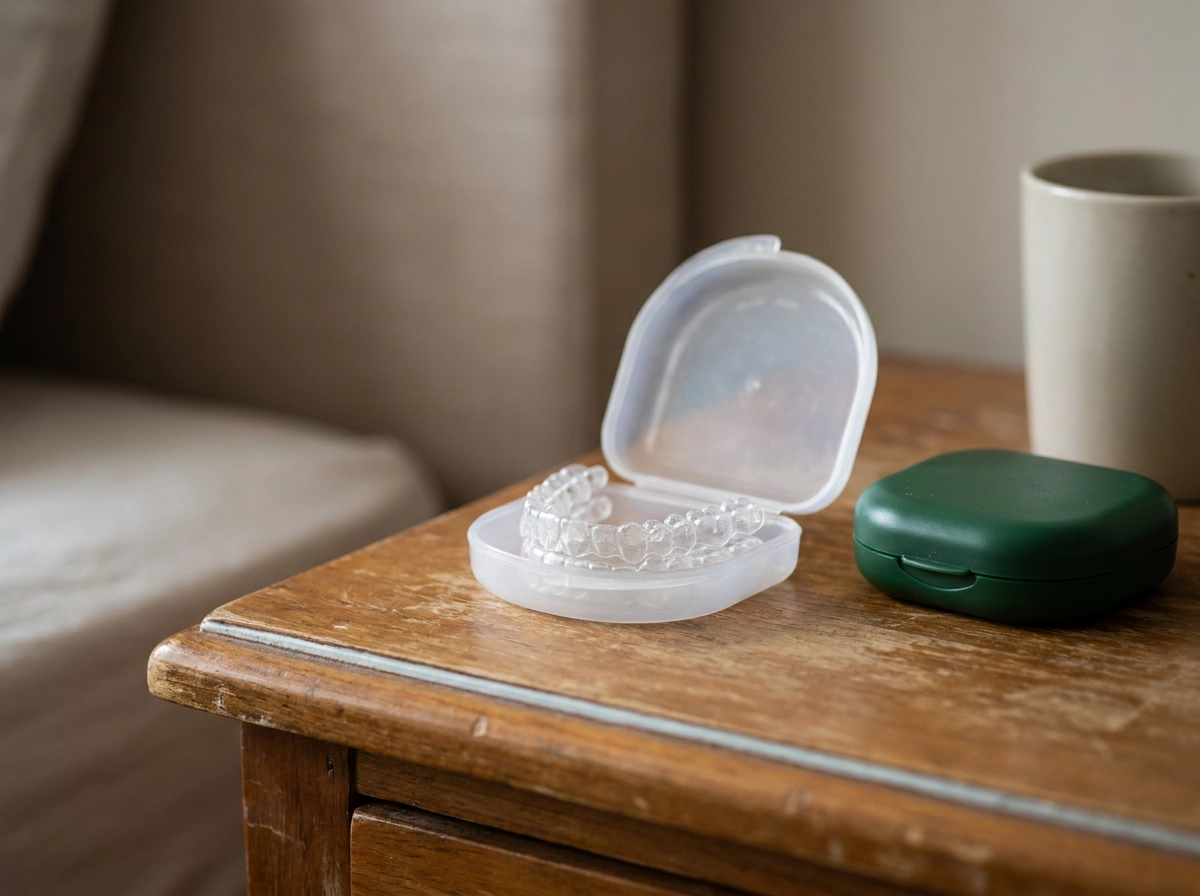
That final scan becomes your retainer: a custom appliance made from your finished teeth, either a clear removable shell or a thin wire bonded behind the front teeth. Either way, it holds your teeth in place while bone and gum tissue settle around them.
Why it isn’t optional: teeth can drift over time, and a retainer is the standard way to protect the alignment you paid time and money for, the difference between a lasting result and one that quietly slides back.
Many patients wear a retainer full time for a stretch after treatment, then nights only, as directed. We will explain your schedule clearly, not leave it to guesswork.
Rinse and clean your retainer daily, use the case instead of a napkin at restaurants, and keep it away from hot water. Bring it to checkups so we can check the fit. Retainers wear out and may need replacing, which is routine.
Straight talk: consistent wear gives your result its best chance of holding. It does not guarantee a permanent result, and what we see in practice is that not wearing it as directed is the most common way a result slips.
What Patients Commonly Wonder Along the Way
A few questions tend to come up.
Will it hurt? Expect pressure and tenderness rather than sharp pain, especially after an adjustment or a new tray. Your dentist will tell you which over-the-counter pain relievers are safe for you. We do not promise a painless course.
Can I eat normally? Mostly. Cut harder foods smaller, skip sticky candy and ice, and plan soft meals for a day or two after adjustments. Trays come out for meals, which many patients find easier than brackets.
Will people notice? Tooth-colored brackets are far less obvious than metal, and clear trays are subtle but not invisible up close. Many patients tell us the people around them notice far less than they feared.
Coffee, tea, staining? Drinks that stain teeth can stain trays and the bonding around brackets. Rinse with water afterward and clean consistently.
Something breaks? A loose bracket, poking wire, cracked tray, or lost aligner is a phone call, not a crisis. Call 302-239-0410 and we will get you in. Our Wilmington emergency dental care guide can help. For facial swelling with fever, or trouble breathing or swallowing, go to the emergency room.
Choosing a Cosmetic Dentist Close to Home
So who should do the work? If you searched cosmetic dentist near me or cosmetic dentist close to me, a few honest answers tell you a lot before you book.
Ask whether you get a written estimate before treatment starts and what it includes, like adjustment visits, retainers, and repairs. A clear answer says a lot, and insurance and payment can be sorted in that same conversation, as we cover in detail below.
One dental home, not a relay race. When family, general and pediatric dentist care happens under one roof, cleanings, fillings, crowns, bridges, dentures, root canal therapy, implants, and emergency care mean fewer referrals and fewer records passed between offices mid-treatment.
Longevity matters too, especially if dental visits make you anxious. Pike Creek Dental has cared for families in Pike Creek, Hockessin, Newark, Greenville, and nearby Landenberg, PA for over 45 years, often across generations, with Dr. Myochul Kwon, Dr. Nick Faure, Dr. Whitney Kehrer, and Dr. Suraj Patel.
The question that matters most: confirm a dentist supervises treatment in the office where you sit, with an exam, imaging, and a plan you can see first. Convenience counts only alongside clinical oversight.
Cost, Insurance, and Financing Without the Guesswork
So why won’t you find a price on this page? Because what treatment costs depends on the treatment itself and on your specific dental plan: deductibles, annual maximums, and whether orthodontic benefits apply. A figure pulled from a website would mislead more often than it would help.
Instead, you get a written estimate before treatment begins, built from your exam, your scan, and your plan details, so you can decide with real numbers in front of you.
We are in network with most major dental insurance plans, and our team handles claims and benefit checks, including asking your plan what it covers for adult orthodontics before you start. Prefer to spread the cost? CareCredit and Cherry financing are both available, and we will walk you through each.
Wherever you go, ask four things: what exactly is included, how long the estimate holds, what happens if treatment runs longer than expected, and whether retainers are part of the total. Those answers tell you a lot before you commit to anything.
Your Next Step Toward a Straighter Smile
The path is shorter than most adults expect: exam and conversation, digital scan and a plan you can see, starting appointment, a few check-ins, then a retainer that protects it all. If your front teeth are the only concern, two years of metal braces isn’t required.
Start with a real exam, because candidacy, timeline and cost depend on your teeth and gums. Call 302-239-0410 or book at pikecreekdental.com/appointments. New patients welcome, including anyone nervous about dental visits.
You’ll find us in the Pike Creek area of Wilmington, an easy drive from Hockessin, Newark, Greenville and nearby Landenberg, PA, with early and evening hours. For anything urgent, call us first. For facial swelling with fever, or trouble breathing or swallowing, go to the emergency room.
Conclusion
Short term orthodontics, a limited treatment for your front teeth, can be simpler than many adults expect. A real exam confirms whether it fits your teeth and gums. A digital scan turns that into a plan you can see, with stages from your starting appointment through middle check-ins. A retainer protects your result after active treatment, and cost, insurance, and financing get sorted before anything begins, as covered earlier.
Whenever you are ready to see what is possible for your smile, call 302-239-0410 or book at pikecreekdental.com/appointments.











Leave a Reply