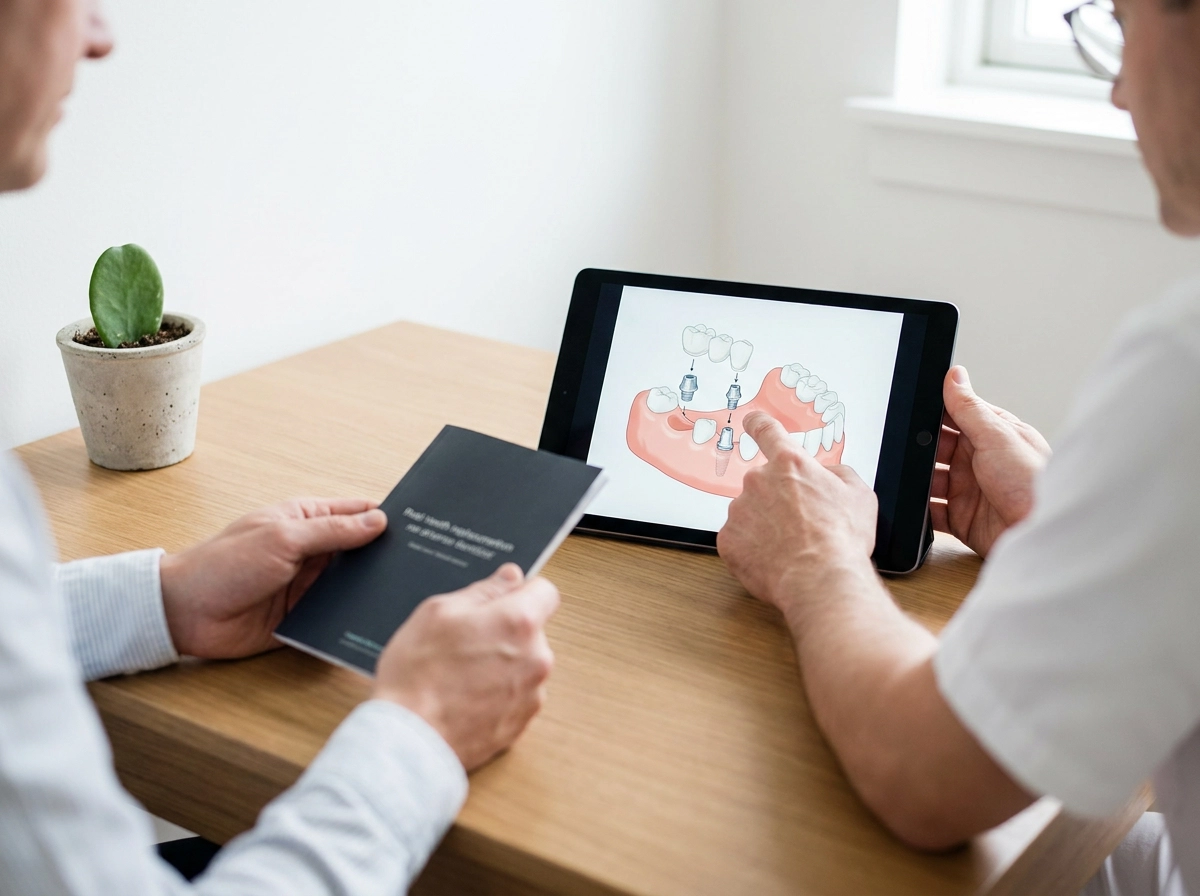

Professional header image for step-by-step guide: Six Month Smiles for Crooked Front Teeth: A Timeline

Six Month Smiles for Crooked Front Teeth: A Timeline

If crooked or crowded front teeth have you wondering about a straighter smile, but two years of metal braces feels like a nonstarter, you are in the right place. Six Month Smiles is a short-term cosmetic orthodontic option focused on straightening the front teeth, rather than moving every tooth in your mouth. For adults who only want a more even smile, it can offer a cosmetic-first path with a shorter timeline. This post is not another bracket versus aligner debate. Instead, we will follow the real patient journey, stage by stage. You will learn how to decide if short-term orthodontics is right for your front teeth, what happens at the consult and exam, how a digital scan shapes your treatment plan, what the first two weeks feel like, and what changes during the middle months. We will also cover the finish line, the retainer that protects your result, common questions, and how to choose a cosmetic dentist close to home, including care in Pike Creek, Wilmington, Hockessin, Newark, and Greenville, DE. Cost, insurance, and financing are on the list too. Ready for the next step? Call 302-239-0410 or book at pikecreekdental.com/appointments for an exam and personal advice.

Is Short Term Orthodontics Right for Your Front Teeth?

Short term orthodontics suits adults whose front teeth are crowded, spaced, or have shifted over time. The goal is cosmetic alignment of the teeth people see when you smile, not repositioning every tooth or changing how your back teeth meet.

A significant bite problem, missing back teeth, active gum disease, or jaw joint symptoms may call for a fuller orthodontic or restorative plan instead. Your dentist will explain why in plain language before anything starts.

Gum health comes first. Teeth move through the bone and gum tissue holding them, so inflamed gums need attention before alignment begins. Total Health Dentistry looks for root causes and treats gum inflammation as part of whole body health.

A supervised exam matters, too. Custom aligners sold directly to consumers skip the exam, X-rays, and the professional check on whether your teeth and gums can handle movement, and the FDA has warned about aligners sold without a dentist's supervision.

Timelines are targets, not promises: it depends on how far your teeth must move and how your body responds.

One note on the name: Six Month Smiles is a short term system for front teeth. Which system fits your teeth is something your dentist confirms at the exam, and Six Month Smiles vs. Clear Aligners: Which Fits You? covers the comparison.

Stage 1: The Consult and Exam

Your first visit is information gathering, not a pitch. We examine your teeth and gums, review your history, and take photos so you see what your dentist sees. If the same two or three teeth have annoyed you for years, mention it; that detail shapes the plan.

Expect questions about sensitivity, grinding, previous crowns or bonding, medications, and any wedding or job interview you want to work around. None of it is a trap; it just helps the plan fit your life.

A CBCT 3D scan may show roots and bone in three dimensions, and DIAGNOdent helps find cavities that are hard to see. Imaging is chosen case by case, following ADA imaging guidance, the same staged thinking behind our dental implant process in Wilmington, DE.

Then comes the conversation our doctors are known for: your options, what each involves, how long each takes, and what happens if you wait.

Early and evening appointment times mean a consult rarely costs a half day, and our office is a short drive from Pike Creek, Hockessin, Newark, Greenville and Landenberg, PA.

Stage 2: The Digital Scan and Your Treatment Plan

Then comes the scan. No goopy impression trays here. 3Shape TRIOS digital scanning uses a small handheld wand that glides across your teeth and builds a detailed 3D model on screen. Many patients tell us it is odd for a moment, then unremarkable.

Your own teeth appear on the monitor, crowding included, with an on-screen preview of where they would end up. That is usually when patients stop wondering whether it will work and start asking about dates.

Six Month Smiles is a short-term system; clear tray systems like Invisalign and ClearCorrect use removable trays. Your dentist explains which approach fits your teeth. Both are options in our office, which also handles bridges, dentures and implants.

Before anything is bonded or worn, you get a written estimate of cost and how your insurance applies. Cost depends on the treatment and your plan, so we do not quote numbers without your details.

Planning on a scan beats planning on a hunch: teeth can be repositioned digitally and reviewed with you first, so the trade-offs and realistic movement are clear before treatment starts.

Stage 3: Getting Started and the First Two Weeks

With brackets and a wire, you come in for a bonding appointment. Tooth-colored brackets go on the front teeth, a light wire threads through them, and you leave with wax, a care sheet, and a floss-threader demonstration.

With clear trays, we fit the first one in the office, show you how to insert and remove it, and explain your wear hours. You leave with cleaning instructions for tray and teeth. Wear time drives how closely your result matches the plan.

Expect pressure and tenderness for a few days as teeth start moving, plus some adjustment in your lips, cheeks, or tongue. Soft foods help; ask your dentist which over-the-counter options suit you. We don't promise a painless course, but most adults call it manageable.

Most patients are back on calls the same week. Trays can cause a slight lisp for a little while at first; reading aloud at home helps. If your job involves a lot of speaking, tell us. Our First Time Visit Expectations cover the rest.

Skip tray hours, missed visits, pen chewing, and very hard or sticky foods. Small habits add up.

Stage 4: The Middle Months and What Changes

From here, the adult cosmetic orthodontics process settles into a rhythm of steady changes.

With brackets and a wire, short visits every few weeks put gentle pressure back on the teeth. With trays, you switch to a new set on the schedule your dentist sets, checking in periodically so progress stays on track.

Each visit, your dentist checks whether teeth are tracking as planned, whether the appliance fits well, how your gums look, and whether your home care is keeping up. A small tweak or a fresh set of aligners is normal, not a setback.

You will see change in the mirror long before the end, usually teeth rotating into line first, then small gaps closing. We take photos along the way so it is documented, not just felt.

Brush more often than usual, use interdental brushes or floss threaders where the appliance traps plaque, and keep your regular cleanings. Gum inflammation is easier to prevent than to reverse.

As we said earlier, your finish date is a target, not a promise.

Stage 5: Reaching the Finish Line

When your front teeth sit where your plan intended, the finish is quick. Brackets and wire come off in one appointment; with trays, you simply wear your last one. For many adults, it is the first time in years they have seen their front teeth in a straight line with nothing on them.

Before you leave, your dentist checks that your bite still meets comfortably, that your gums look calm, and that no bonding material remains on the tooth surfaces. Those small polish steps change how smooth the teeth feel against your tongue.

If color, shape, or a small chip still bothers you, whitening, bonding, or veneers can refine it, all offered in our office. No pressure, just a conversation.

Either way, we take a final digital scan to build your retainers. That is why retention gets planned before treatment ends, not after.
Pike Creek Dental

The Retainer That Protects the Result

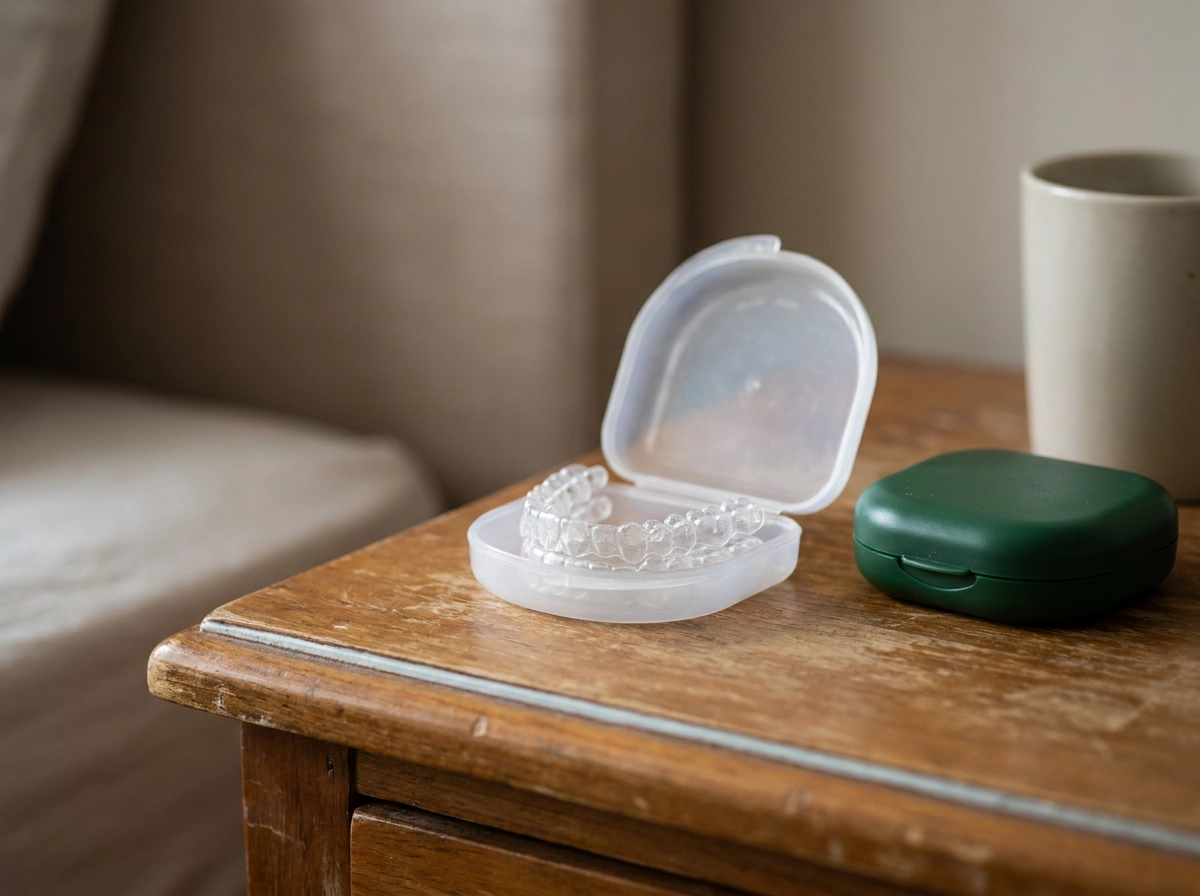
That final scan becomes your retainer: a custom appliance made from your finished teeth, either a clear removable shell or a thin wire bonded behind the front teeth. Either way, it holds your teeth in place while bone and gum tissue settle around them.

Why it isn't optional: teeth can drift over time, and a retainer is the standard way to protect the alignment you paid time and money for, the difference between a lasting result and one that quietly slides back.

Many patients wear a retainer full time for a stretch after treatment, then nights only, as directed. We will explain your schedule clearly, not leave it to guesswork.

Rinse and clean your retainer daily, use the case instead of a napkin at restaurants, and keep it away from hot water. Bring it to checkups so we can check the fit. Retainers wear out and may need replacing, which is routine.

Straight talk: consistent wear gives your result its best chance of holding. It does not guarantee a permanent result, and what we see in practice is that not wearing it as directed is the most common way a result slips.

What Patients Commonly Wonder Along the Way

A few questions tend to come up.

Will it hurt? Expect pressure and tenderness rather than sharp pain, especially after an adjustment or a new tray. Your dentist will tell you which over-the-counter pain relievers are safe for you. We do not promise a painless course.

Can I eat normally? Mostly. Cut harder foods smaller, skip sticky candy and ice, and plan soft meals for a day or two after adjustments. Trays come out for meals, which many patients find easier than brackets.

Will people notice? Tooth-colored brackets are far less obvious than metal, and clear trays are subtle but not invisible up close. Many patients tell us the people around them notice far less than they feared.

Coffee, tea, staining? Drinks that stain teeth can stain trays and the bonding around brackets. Rinse with water afterward and clean consistently.

Something breaks? A loose bracket, poking wire, cracked tray, or lost aligner is a phone call, not a crisis. Call 302-239-0410 and we will get you in. Our Wilmington emergency dental care guide can help. For facial swelling with fever, or trouble breathing or swallowing, go to the emergency room.

Choosing a Cosmetic Dentist Close to Home

So who should do the work? If you searched cosmetic dentist near me or cosmetic dentist close to me, a few honest answers tell you a lot before you book.

Ask whether you get a written estimate before treatment starts and what it includes, like adjustment visits, retainers, and repairs. A clear answer says a lot, and insurance and payment can be sorted in that same conversation, as we cover in detail below.

One dental home, not a relay race. When family, general and pediatric dentist care happens under one roof, cleanings, fillings, crowns, bridges, dentures, root canal therapy, implants, and emergency care mean fewer referrals and fewer records passed between offices mid-treatment.

Longevity matters too, especially if dental visits make you anxious. Pike Creek Dental has cared for families in Pike Creek, Hockessin, Newark, Greenville, and nearby Landenberg, PA for over 45 years, often across generations, with Dr. Myochul Kwon, Dr. Nick Faure, Dr. Whitney Kehrer, and Dr. Suraj Patel.

The question that matters most: confirm a dentist supervises treatment in the office where you sit, with an exam, imaging, and a plan you can see first. Convenience counts only alongside clinical oversight.

Cost, Insurance, and Financing Without the Guesswork

So why won't you find a price on this page? Because what treatment costs depends on the treatment itself and on your specific dental plan: deductibles, annual maximums, and whether orthodontic benefits apply. A figure pulled from a website would mislead more often than it would help.

Instead, you get a written estimate before treatment begins, built from your exam, your scan, and your plan details, so you can decide with real numbers in front of you.

We are in network with most major dental insurance plans, and our team handles claims and benefit checks, including asking your plan what it covers for adult orthodontics before you start. Prefer to spread the cost? CareCredit and Cherry financing are both available, and we will walk you through each.

Wherever you go, ask four things: what exactly is included, how long the estimate holds, what happens if treatment runs longer than expected, and whether retainers are part of the total. Those answers tell you a lot before you commit to anything.

Your Next Step Toward a Straighter Smile

The path is shorter than most adults expect: exam and conversation, digital scan and a plan you can see, starting appointment, a few check-ins, then a retainer that protects it all. If your front teeth are the only concern, two years of metal braces isn't required.

Start with a real exam, because candidacy, timeline and cost depend on your teeth and gums. Call 302-239-0410 or book at pikecreekdental.com/appointments. New patients welcome, including anyone nervous about dental visits.

You'll find us in the Pike Creek area of Wilmington, an easy drive from Hockessin, Newark, Greenville and nearby Landenberg, PA, with early and evening hours. For anything urgent, call us first. For facial swelling with fever, or trouble breathing or swallowing, go to the emergency room.

Conclusion

Short term orthodontics, a limited treatment for your front teeth, can be simpler than many adults expect. A real exam confirms whether it fits your teeth and gums. A digital scan turns that into a plan you can see, with stages from your starting appointment through middle check-ins. A retainer protects your result after active treatment, and cost, insurance, and financing get sorted before anything begins, as covered earlier.

Whenever you are ready to see what is possible for your smile, call 302-239-0410 or book at pikecreekdental.com/appointments.

Read more...
Professional header image for educational tutorial: Your First Cleaning at Pike Creek Dental: Step by Step

Your First Cleaning at Pike Creek Dental: Step by Step

Your first teeth cleaning should not feel like a mystery. If you are new to Pike Creek Dental, or new to routine dental care altogether, knowing what comes next can turn a nervous appointment into a calm one. A first cleaning here is a structured exam and hygiene visit, not a quick polish. That matters, because this visit sets your personal baseline and shapes everything that follows.

In this step by step guide, we will walk through the whole visit. You will learn why a first cleaning is an exam and a cleaning in one visit, what happens before you sit down, and how the exam and digital scan build your baseline. We will also cover the cleaning itself, what we found and when to come back, cost and insurance basics, and the questions new patients ask most. Our dentists, Dr. Myochul Kwon, Dr. Nick Faure, Dr. Whitney Kehrer and Dr. Suraj Patel, care for patients from Pike Creek, Wilmington, Hockessin, Newark and Greenville, DE.

Ready when you are: call 302-239-0410 or book at pikecreekdental.com/appointments.

Why a First Cleaning Is an Exam and a Cleaning in One Visit

A quick polish is one thing. Your first cleaning here is a full picture.

A maintenance cleaning removes buildup and refreshes your teeth. A first visit is an exam, gum measurements, digital imaging and hygiene in one appointment, which is why it runs longer. You are not being slow-walked. We are building a record.

The cleaning and your home routine share one goal: removing plaque biofilm, the sticky film of bacteria that builds up on teeth. Left alone, it hardens into tartar that only a professional instrument can lift.

Because we have no records for you yet, this visit creates your baseline, the reference point every future visit is compared against. That is how a small change in a gum pocket gets noticed early instead of years later. It also ties into our Total Health Dentistry: Why We Check Your Gums First approach, which treats gum inflammation as part of whole-body health.

If it has been years, hear this plainly: the first visit is information gathering, not a scorecard, and no one will lecture you about the past. Gum inflammation is common, not a personal failure. CDC figures from the 2009 to 2014 NHANES survey found about 42% of US adults 30 and older with teeth had some periodontitis, and 7.8% had severe periodontitis. That is a shared public health picture, and it means we start where you are today.

Before You Sit Down: Scheduling, Check-In and Your Health History

Getting on the schedule is the easy part. Call 302-239-0410 or book your appointment online, and choose a time that fits real life: we're open Monday and Tuesday until 8pm and Friday from 7am. The office sits at 4901 Limestone Road, Wilmington, DE 19808, a short drive from Pike Creek, Hockessin, Newark and Greenville, and patients come to us from Landenberg, PA as well.

Your new patient paperwork covers medical conditions, medications, surgeries, pregnancy, tobacco use and allergies. None of it is busywork. A heart condition, for example, may mean we discuss antibiotics before certain procedures, and some medications cause dry mouth, which changes how we protect your teeth. Bring a photo ID, your insurance card and a written list of medications and supplements, and arrive about 10 to 15 minutes before your appointment time.

If you feel anxious, say so at check-in. Name the specific worry, whether it's the sound of the instruments, the syringe or the bill, and we adjust the pace and explain each step before it starts. No lectures, ever.

Money gets settled before treatment, not after. We are in-network with most major dental insurance plans. What you pay depends on the treatment and your plan, so we verify benefits, review them with you and give you an estimate before anything begins. CareCredit and Cherry financing are available for larger treatment plans.

Once you're checked in, the exam and digital records come next.

The Exam and Digital Scan: Building Your Personal Baseline

Once your history is in the chart, we move to the chair. The dentist starts with a full look: teeth, gums, tongue, cheeks and bite, checking for decay, cracks, worn or loose fillings, and any change in gum color or shape.

Then gum measurements. A slim instrument records the gap between the gum and the tooth, called probing depth. Those numbers get written down so future visits compare against today's real baseline, not a guess.

Next comes 3Shape TRIOS digital scanning: a small handheld camera builds a 3D picture of your teeth in a few minutes, with no goopy impression trays. That scan helps with aligners, crowns, and tracking change over time. If a missing tooth ever comes up, the same scan data supports a side-by-side look at bridges, dentures and implants.

Other tools are available when needed, not automatic: DIAGNODENT cavity detection, CBCT 3D imaging and the Biolase Waterlase dental laser. Each is used when the exam points to a reason, so a routine cleaning may not involve any of them.

X-rays come after the exam, not before. Low-dose digital images show what eyes cannot, including decay between teeth, bone levels, and problems under old fillings. ADA guidance notes there is no one-size-fits-all interval; a healthy adult often repeats them every 6 to 18 months depending on risk, and we decide that together.

The Cleaning Itself, Step by Step

Pike Creek Dental

Once your exam and scan are complete, the cleaning starts. It usually moves through three stages, and knowing them ahead of time takes the surprise out of the room.

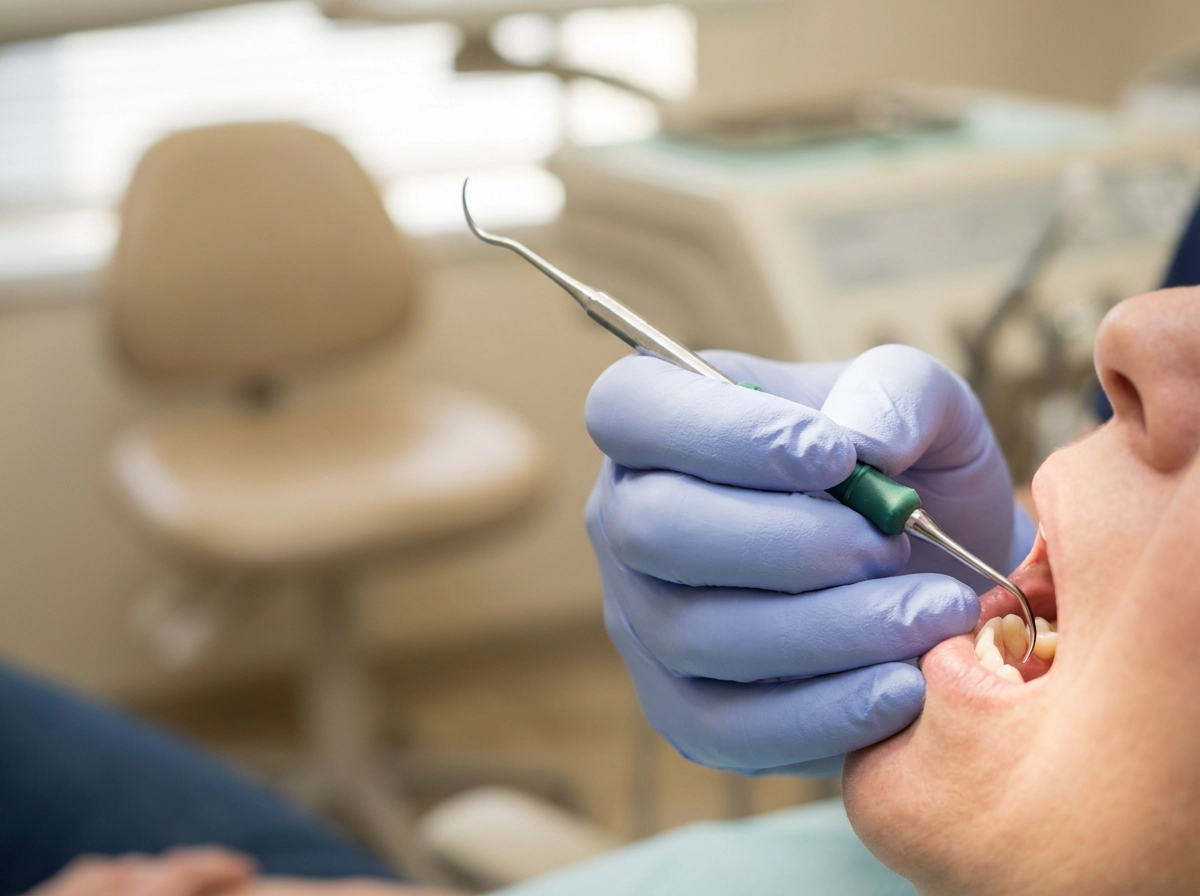
Hand scaling first. Using a small curved instrument, the hygienist lifts plaque and tartar (hardened plaque) from the tooth surface above the gumline. You will hear a light scraping sound and feel gentle pressure. That is normal, and it does not mean anything is wrong.

Ultrasonic scaling if there is more buildup. A vibrating tip with a water spray and suction loosens deposits quickly. Expect a soft hum, a cool splash of water, and suction keeping your mouth clear.

Polishing and flossing last. A soft rubber cup with a gritty paste smooths the tooth surfaces, then the hygienist flosses between every tooth. This is the part patients usually describe as the smooth, fresh finish.

Sometimes a routine cleaning is not enough. If inflammation is found below the gumline, we may recommend scaling and root planing, a deeper cleaning done with numbing and often scheduled for a separate appointment. Your hygienist explains what was seen before anything is booked, and our post-treatment instructions page covers what to expect afterward.

Worth remembering: gingivitis is reversible with professional biofilm removal plus consistent home care. That is exactly why we talk about your return interval.

A first visit generally runs longer than a maintenance cleaning. Ask when you book how long to plan for and which tools your hygienist expects to use.

Ready for the part where we tell you what we found?

What We Found and When to Come Back

Once your cleaning wraps up, we sit down and talk through what we saw. Your hygienist or dentist pulls up your images and X-rays on the screen beside you and walks through the measurements, so you are looking at the same picture we are rather than taking our word for it.

If gum disease shows up, we explain it with staging and grading: staging says how much has changed, and grading estimates how likely it is to progress. That framework comes from the 2017 World Workshop classification, and it is a planning tool, not a label.

Many adults come back every six months. When gum inflammation or other risk factors are present, three to four months is often suggested. Either way, we decide the schedule together.

You will leave with a small, specific plan. That might mean a tweak to your brushing angle, interdental brushes instead of floss, a night guard if clenching shows up, dry mouth products, or a different routine around braces. Biofilm tends to collect around crowns, bridges, aligners and implants, which is one reason those patients often need closer intervals.

Our Total Health Dentistry approach looks for root causes and treats gum inflammation as part of whole-body health. Research suggests associations with other conditions, though the evidence on cause and effect is mixed.

Most follow-up care happens under this roof: fillings, crowns, bridges, dentures, root canals, implants, whitening, veneers, bonding, clear aligners and emergency dental care. If budget is on your mind, see how our patients keep care affordable.

Cost, Insurance and Making the Next Visit Easy

Once you and your dentist have settled on a plan, the practical questions come next: what will it cost, and when should you come back?

What you pay depends on the treatment and your plan, so we do not quote fees here. We do verify your benefits, review them with you, and give you an estimate before treatment starts. We are in-network with most major dental insurance plans and help with claims. For larger treatment plans, CareCredit and Cherry financing are available.

Scheduling is built around working adults. Monday and Tuesday until 8pm and Friday from 7am mean patients in Wilmington, Pike Creek and Newark can keep appointments without taking time off.

If you have been searching for a teeth cleaning near me and comparing a few offices, ask each one three questions: who performs the exam, how long the first appointment runs, and whether you get a written estimate before treatment. An aching tooth that keeps you up at night is a different situation, and here is how to tell if you need a root canal and why waiting hurts.

For a toothache, swelling or a broken tooth, call the office at 302-239-0410. For facial swelling with fever, or trouble breathing or swallowing, go to the emergency room.

Questions New Patients Ask Before a First Teeth Cleaning

Here's what else new patients ask.

How long will it take? A first visit runs longer than the maintenance cleanings that follow, because we build records from scratch: health history, gum measurements, digital scans and the cleaning itself. We don't quote a set time here, so ask when you book.

Will it hurt? Most patients describe pressure and scraping rather than pain. We explain each step before we start, and if you raise a hand, we slow down or pause. We can't promise a pain-free visit.

What if I haven't been in five or ten years? No lecture. Your plan comes from today's measurements, not your history. Gum inflammation is common, so the first step is knowing where things stand. See our First Time Visit Expectations.

Which technology will be used on me? Digital scanning is a normal part of records at our office. DIAGNODENT cavity detection, CBCT 3D imaging and the Waterlase laser are used when the exam calls for them. You can always ask what's being used and why.

Can the whole family be seen here? Yes. Children's dentistry starts from the first visit, older adults are welcome, and fillings, crowns, root canals, implants, cosmetic work and clear aligners like Invisalign, ClearCorrect and Six Month Smiles all happen in one office. That helps if you're searching for teeth cleaning near me for a household, not just yourself.

Ready When You Are: Your First Visit to a Local Dental Home

So that's the short version of what to expect. The longer version is simple: your first cleaning at Pike Creek Dental is a structured exam plus hygiene visit, not a rushed polish. You leave with a personal baseline, a written plan, and a clear answer on when to come back.

Ready to start? Call 302-239-0410 or book at pikecreekdental.com/appointments. Tell us at booking if you feel anxious or haven't been in a while, and we'll pace the visit for you.
We've cared for families in Pike Creek, Hockessin, Newark, Greenville and nearby Landenberg, PA for more than 45 years, often across several generations, from 4901 Limestone Road in Wilmington, Delaware.

For a toothache, swelling or a broken tooth, call the office at 302-239-0410. If you have facial swelling with fever, or trouble breathing or swallowing, go to the emergency room. If you're unsure which situation you're in, our guide to chipped or knocked out teeth in Wilmington sorts injuries into three simple buckets.

One appointment is all it takes to know exactly where you stand.

Conclusion

Your first cleaning at Pike Creek Dental is more than a polish. It combines a full exam with hygiene care, so you leave with a personal baseline, a written plan, and a clear answer on when to return. You also get time to ask questions, share dental anxiety, and understand costs before treatment. Cost depends on your needs and your insurance plan, and estimates come before treatment, with CareCredit and Cherry financing available if you need them.

If you're in Pike Creek, Wilmington, Hockessin, Newark, Greenville or nearby, you don't have to figure it out alone. One appointment can show you exactly where you stand. For a toothache, swelling or a broken tooth, call the office at 302-239-0410. If you have facial swelling with fever, or trouble breathing or swallowing, go to the emergency room. Otherwise, call 302-239-0410 or book at pikecreekdental.com/appointments to take the first step toward a healthier smile.

Read more...
Professional header image for educational tutorial: Chipped or Knocked Out? Wilmington Emergency Dental Care

Chipped or Knocked Out? Wilmington Emergency Dental Care

Your kid trips on the playground. You bite into something wrong. Suddenly there's blood, a loose tooth, or a tooth in your hand, and your brain goes straight to worst-case scenario. Do you rush to the ER? Call an emergency dental care dentist? Wait until morning? Here's the good news: most dental injuries follow a simple triage plan.

A fully knocked-out permanent tooth is a minutes-matter problem. Put it back in the socket if you can, or store it in milk or saliva, and get help immediately. A small, painless chip often is not. Knowing the difference can save a tooth and save you an unnecessary trip to the emergency room.

In this post, we'll sort injuries into three buckets: same-day, next-morning, and watch it. You'll learn the first-aid sequence for a knocked-out permanent tooth, when to choose the ER instead of the dentist, how baby teeth and permanent teeth differ, what emergency dental care costs and how we make it easier, and how to prepare before you need it. Let's stop guessing and start triaging.

Pike Creek Dental

Why Triaging a Dental Injury Beats Panicking

Traumatic dental injuries are common, and almost never your fault. Twenty-five percent of all school children experience dental trauma, and roughly a third of adults have injured a permanent tooth, most before age 19 (IADT combined guidelines). A meta-analysis also found a world prevalence of 22.7% for traumatic dental injuries in primary teeth. Dental injuries comprise about 5% of all injuries. Guilt and panic both slow you down, so it helps to say that out loud.

Our emergency dental care team sees them regularly in Wilmington, and we are not judging how it happened.

The real question in the first ten minutes is not "how bad is this?" It is "which of three buckets am I in?" Once that is clear, your next step is obvious.

Avulsion, a permanent tooth knocked completely out of the socket, is just 0.5% to 16% of dental injuries, but it is the one where the first few minutes shape the outcome (AAPD/IADT avulsion guideline).

Glossary: avulsion (tooth completely out of the socket), fracture (a crack or break), luxation (tooth loose or shifted but still in the socket), pulp (the nerve and blood vessel tissue inside), enamel (the hard outer shell).

None of this is a diagnosis. Use it to decide whether to call, then let us examine you for advice that fits.

The Three Buckets: Same-Day, Next-Morning, Watch It

Here is how they sort: same-day covers the urgent cases, next-morning covers problems that can wait overnight, and watch-it covers minor changes worth noting but not acting on immediately. The sections below cover each bucket in detail, skip to whichever fits.

Ask two questions: does it hurt when you bite down, and does the tooth move when you touch it? Pain on biting plus movement suggests a root or bone injury, so it climbs the list.

Unsure? Call 302-239-0410 and describe what you see; a two-minute call beats guessing. We keep early and evening hours, Monday and Tuesday until 8 p.m. and Friday from 7 a.m., so the next-morning bucket has a place to land. You can also book online. Financing and estimates keep cost manageable.

Bucket 1: Same-Day Emergency Dental Care

If any of these fit what you are seeing, you belong in Bucket 1. Call us at 302-239-0410.

  • Knocked out permanent tooth: the minutes matter case. Handle it by the crown, the part you normally see, never by the root, and get it to us fast. The full sequence is in its own section below.
  • Tooth pushed out of position (luxation): still in the socket, but shifted. It may look shorter or longer than its neighbor and often bleeds at the gumline. Do not push it back yourself. Call us today.
  • Broken tooth with a red dot or bleeding from the center: that spot is the pulp, the nerve tissue inside the tooth. It reacts sharply to air and temperature, and it needs same-day care. Clinicians call this a complicated crown fracture.
  • Severe or steadily worsening pain: especially pain that keeps you awake at night and does not ease with over-the-counter pain relief used as directed on the label.
  • A tooth that is loose or tender when you bite, or a section of gum and bone that moves along with it. That pattern suggests an alveolar fracture, meaning the bone holding the tooth has broken, so it needs prompt attention.
  • A blow to the mouth with bleeding you cannot bring under control with steady pressure.

Bucket 2: The Next-Morning List

This bucket is for problems that rarely worsen overnight.

A visible crack or chip qualifies if there is no red spot, no bleeding from the center, and no looseness. A lost filling or crown that causes only mild sensitivity can usually wait for a morning call; bring any loose piece with you. Sensitivity to cold or sweets that settles also belongs here, with no swelling, fever, or bad taste. So does a bruised or slightly discolored tooth after a knock, with no looseness and no pain on biting. Color change can appear days later, so it is worth a look even if today feels fine.

Why morning and not whenever? Small fractures and lost restorations rarely become emergencies overnight, but delay lets the tooth crack further or the nerve get irritated. A morning visit also lets us take proper imaging. Our office opens at 7 a.m. Fridays and stays until 8 p.m. Mondays and Tuesdays.

Tonight, keep the area clean, avoid chewing on that side, and take over-the-counter pain relief only as directed on the label. If swelling, fever, or spreading pain starts, move up to Bucket 1 or read the emergency room section below.

Bucket 3: The Watch-It List

Here is what belongs in Bucket 3.

A small chip in the enamel, the hard outer shell, that you cannot feel with your tongue, does not hurt, and shows no pink or red underneath. These are common on front teeth and often need only smoothing or a simple bonded repair at a regular visit. A chipped back tooth edge fits here too, as long as it is not sharp enough to cut your tongue or cheek.

A tooth that feels different after a bump but is not loose, not tender when you bite, and not discolored can also wait. Mention it at your next scheduled cleaning if nothing changes.

If the edge is catching on your cheek or tongue, move it to Bucket 2 and call us.

Watch it does not mean ignore it. Note the date it happened and mention it at your next exam. A quick look at a chip is part of the exam we do anyway.

What moves it out? New pain, new looseness, new swelling, a color change, or a chip that gets bigger. Any one of those, call us.

Knocked Out Permanent Tooth: The First-Aid Sequence

The one true minutes-matter injury is a permanent tooth knocked completely out of the socket, called an avulsion.

Step 1: Stay calm and find the tooth. Pick it up by the crown, the white part you normally see. Do not touch the root, scrub it, or soak it in water.

Step 2: If it is dirty, rinse it briefly with milk, saline, or the person's own saliva. Handle it gently; seconds count.

Step 3: If you can, put it back in the socket and have the person bite gently on clean gauze. If not, store it in a small container of milk or their own saliva. Do not let it dry out, and never use water.

Step 4: Call our Wilmington office right away at 302-239-0410. If we are closed, go to the nearest emergency department and bring the tooth in its container, even if it looks hopeless.

Step 5: A knocked-out baby tooth is different. Do not put it back in the socket, the approach for baby teeth differs from permanent teeth in important ways; call us and we will guide you.

Why the rush? The guideline is clear that outcomes after avulsion depend heavily on what happens at the place of the accident, which is why first-aid awareness is so strongly encouraged (IADT). No result is guaranteed. Get the tooth to a dentist quickly so we can examine it, take imaging, and talk through your realistic options.

When It Is the Emergency Room, Not the Dentist

A knocked-out tooth with no other injuries is ours to handle. Call us first at 302-239-0410. An emergency room can see you, but the tooth still needs a dentist, so you may wind up making two trips instead of one.

Some problems belong at the hospital. Go to the emergency room, not our office, if there is facial swelling with fever, or any trouble breathing or swallowing. Those signs can point to an infection that needs hospital-level care.

Other reasons to go straight to the emergency room include uncontrolled bleeding, a suspected jaw fracture, any head injury, loss of consciousness, or a wound that may need stitches, these go beyond what a dental office handles. A dentist emergency service handles teeth, gums, and the supporting bone, not airway, breathing, or head injury. If you are unsure which situation you are in, err toward the ER and call us afterward.

If we are closed, call anyway and leave your name, number, and what happened. Our team will call back with the next step. One detail speeds things up: whether it was a baby tooth or a permanent one.

Baby Teeth vs. Permanent Teeth: Different Rules, Different Stakes

Next question: whose tooth are we talking about? Baby teeth and permanent teeth follow different rules.

A knocked-out baby tooth is handled differently from a permanent tooth, do not attempt to reinsert it. Call us for guidance on next steps.

Loose or shifted baby teeth are common, because the root shrinks as the permanent tooth arrives. Luxation injuries, where the tooth shifts but stays in the socket, are among the more common baby-tooth injuries we see. Kids repeat injuries often, especially toddlers and early grade schoolers. That's a reason to save our number now, not to feel bad about a fall.

Small enamel chips in baby teeth usually just need a look, maybe a smoothing. A chip with a red or bleeding center, or a tooth that turns gray or hurts, needs to be seen.

Permanent teeth still growing get extra care: we work to keep the pulp, the nerve and blood supply inside, alive so the root can finish forming. That's another reason not to wait on a young person's broken tooth.

When you call, tell us everything: how it happened, when, any loss of consciousness, and whether a tetanus shot is current. Those details change how we plan your visit.

What Emergency Dental Care Costs, and How We Make It Easier

Whatever your exam turns up, you will know the cost before we start. Fees depend on the treatment and your specific plan, so we do not quote prices in an article. We give you an estimate first, so nothing surprises you.

We are in-network with most major plans and will walk you through your coverage. Have your card or member ID handy when you call.

CareCredit and Cherry financing are available if you would rather spread a larger treatment over time. Ask when you call and we will explain.

Most injury care happens in one office: exams, imaging, fillings, crowns, root canals, dental implants, bonding, and cosmetic repair. Our CBCT 3D imaging shows root and bone injuries clearly, and we use the Waterlase laser and DIAGNOdent where they help.

If dental visits make you anxious, say so. Dr. Myochul Kwon, Dr. Nick Faure, Dr. Whitney Kehrer, and Dr. Suraj Patel take time to explain what they see. We are a family practice on Limestone Road, not high-volume, with more than 45 years caring for local families.

Next Step: Save This Number Before You Need It

For a quick reminder: a knocked-out permanent tooth is always call-now; a broken tooth with an exposed centre, a loose tooth, or severe pain is same-day; a small painless chip or a lost filling with no swelling can usually wait until morning; and facial swelling with fever or trouble breathing means the ER.

Call Pike Creek Dental at 302-239-0410, or book an appointment. We care for families in Pike Creek, Wilmington, Hockessin, Newark, Greenville, and nearby Landenberg, PA.

Our contact page lists hours and directions. Send a message and you'll reach a thank-you page confirming it arrived; appointment requests end on a confirmation page with next steps.

Save 302-239-0410 in your phone today. The best time to have your dentist's number is before you need it.

Conclusion

Dental injuries feel frightening, but a calm triage plan makes the next step clear. Call Pike Creek Dental at 302-239-0410 or book online. Save the number now, before you need it. Protecting a smile starts with knowing exactly who to call.

Read more...
Professional header image for comparison analysis: Six Month Smiles vs. Clear Aligners: Which Fits You?

Six Month Smiles vs. Clear Aligners: Which Fits You?

You have a calendar full of meetings, a camera roll full of group photos, and teeth you wish looked a little straighter. So when you start comparing Six Month Smiles and clear aligners, it is tempting to ask, "Which one is better?" That is actually the wrong first question. Both options can move teeth, but they are built for different needs, timelines and lifestyles.

In this post, we will compare the two adult orthodontic paths on the things working adults really weigh: how visible the appliance is, how long treatment usually runs, and how much chair time it takes. We will keep current evidence in view, without drowning you in it. We will also talk about comfort, speech, everyday wear, what each option can and cannot correct, and how cost, insurance and financing work without guesswork. You will get a quick self-check to see which camp you fit into, plus a look at what happens after treatment with retainers and gum health. No pressure, no dental jargon overload. Just clear information to help you decide whether to book a consult or not.

Why "Which One Is Better" Is the Wrong First Question

Both Six Month Smiles and clear aligners move teeth. The useful question is not which is superior, but which fits your front teeth, your bite and your calendar.

A fixed appliance means a bracket bonded to each tooth and joined by a wire. An aligner means a removable clear plastic tray you wear over your teeth. Both are adult cosmetic orthodontics.

The current evidence is more even than marketing suggests. A 2025 systematic review and meta-analysis in the Journal of Evidence-Based Dental Practice pooled randomized controlled trials through October 2024 and found clear aligners were not significantly more effective than fixed appliances for simple cases that do not need extractions. The same review reported aligners scored better on pain, treatment time and number of visits, but the authors rate that evidence as low quality. Fixed appliances scored better for speech during treatment, which matters if you run meetings or take calls.

We lead with that honesty because mail-order aligner ads imply aligners are simply better, and the literature does not back that for straightforward front-teeth cases. We would rather you self-select correctly than book a consult for the wrong treatment.

Only an exam with imaging can show what your teeth will do.

What Six Month Smiles Is, and What Clear Aligners Are

Now for the plain-English version.

Six Month Smiles is short-term cosmetic braces. Brackets and a wire concentrate on the front teeth people see when you smile (tooth-colored brackets are the typical configuration; your dentist confirms what's used in your case).

Clear aligners are a planned series of removable trays made from a digital scan of your teeth. We offer Invisalign and ClearCorrect, and we scan with 3Shape TRIOS digital scanning, so trays are built from your actual mouth, not a putty impression.

Both are cosmetic dentistry treatment options for mild to moderate crowding or spacing up front. Neither is a full bite reconstruction, and neither substitutes for treating active gum disease or decay first. Moving teeth through unhealthy gums is a losing plan, which is why our Total Health Dentistry approach looks for root causes and treats gum inflammation as part of whole-body health.

One practical advantage: you can compare both under one roof at 4901 Limestone Road in Wilmington. Same building, same doctors, same imaging, no driving between offices, which is how our practice has worked for more than 45 years.

Next, let's talk visibility.

Visibility: What Shows Up in Photos, Meetings and on Video

Here's the honest part about visibility. Six Month Smiles uses brackets and a wire. Even tooth-colored brackets show up close and in video calls. Plan on people noticing.

Clear aligners are far less noticeable, and they come out for photos, meals and big presentations. Research on patient experience backs that up: aligners are consistently linked with greater comfort and satisfaction. That matters if you're client-facing around Pike Creek, Hockessin, Newark or Greenville.

But removability cuts both ways. A tray in its case moves nothing. Aligners work only when they're in your mouth most of the day and night. Some patients also get attachments, small tooth-colored bumps bonded to teeth so trays can grip. "Invisible" is a stretch in those cases.

So here's your rule. If invisibility is non-negotiable, aligners lean your way. If you know you'd lose or forget trays, a fixed appliance removes the willpower variable. And plenty of adults choose visible braces on purpose. No judgment either way.

Timeline: How Long Each Path Usually Runs

Pike Creek Dental

Six Month Smiles is named for its typical front-teeth case length; treat that as a label for the general range, not a guarantee, since your case could run shorter or longer depending on where your teeth start.

Clear aligner timing depends on how much movement is planned and how consistently you wear the trays, usually most of the day and night. A 2025 systematic review reported aligners may have a treatment-time edge, but rated that evidence low quality. Think lean in the data, not a promise.

Two forgotten pieces: refinement trays after the main aligner series can add weeks, and retainers afterward are a long-term commitment, not optional. Also, do not set a wedding, graduation, interview or move date first and then shop for a treatment to fit it. That is how people end up disappointed.

The reassuring part: a dentist can usually tell within one visit whether your target date is realistic, and if not, what a realistic one looks like.

Chair Time: Fitting Treatment Around a Delaware Workweek

Timeline is one thing; chair time is where the two paths split.

Fixed braces mean short but regular adjustment visits, when the wire is changed, tightened or re-tensioned. Aligners often mean fewer in-office visits: you switch trays at home and come in for progress checks. A 2025 review reported fewer visits with aligners, again on low-quality evidence.

Aligners are not set-and-forget. Someone still has to confirm your teeth are tracking the plan, and a tray that stops fitting needs attention sooner rather than later.

We schedule around work. Our Limestone Road office opens Monday and Tuesday until 8pm and Friday from 7am, so patients in Wilmington, Pike Creek, Hockessin, Newark and Greenville can come in without burning a vacation day.

If you fly for work, ask about longer intervals between check-ins, what to do about a cracked or lost tray on the road, and whether a backup can be ordered ahead.

Visit counts depend on your case and appliance. We give a schedule estimate before treatment starts. If cost is part of the picture, see how patients keep care affordable.

Comfort, Speech and Everyday Wear

The 2025 JEBDP review's pain and speech findings carry real day-to-day weight, so it is worth unpacking them. Braces can change how certain sounds land for a while, which is worth knowing before a quarter full of presentations. Aligners can also affect speech initially; the adjustment period varies by patient.

For both paths, some soreness after a new tray or adjustment is normal; our team will tell you what to expect and when to call. We do not promise pain-free treatment. We tell you what to expect, how to manage it, and when to call us instead of toughing it out.

If dental visits make you nervous, say so at the start. Our dentists, Dr. Myochul Kwon, Dr. Nick Faure, Dr. Whitney Kehrer and Dr. Suraj Patel, work at a pace you can handle, with short visits and clear explanations before anything begins.

What Each Option Can and Cannot Correct

Now that you know how each feels day to day, here's what they can actually change. The comparative research centers on simple cases that do not need extractions: mild crowding, small gaps and minor rotations of the front teeth. That's the honest scope for both paths. Complex bites, significant jaw relationships or cases requiring teeth removed fall outside short-term cosmetic braces and clear aligners alike.

Aligners handle many movements well and struggle with others. Certain rotations are harder to control with a removable tray, which is why small tooth-colored attachments and careful planning exist. Fixed braces give the dentist more direct control over each individual tooth, which can matter for specific movements.

We decide with imaging, not snapshots. CBCT 3D imaging shows what's happening under the gums, 3Shape TRIOS scanning maps your bite digitally, and DIAGNODENT helps catch decay inside a tooth. If your case isn't a good fit for either option, we say so plainly and walk you through alternatives at the same visit. Patients come to us from Landenberg, PA and across New Castle County for exactly that kind of plain explanation.

Cost, Insurance and Financing Without Guesswork

Here's the honest part: cost depends on the treatment and on your dental plan, so no single number fits every mouth, and we will not pretend otherwise. Instead, we give you a written estimate before treatment begins, so you know the range before you commit to anything.

Insurance is where most of the guesswork lives. We are in-network with most major dental insurance plans, and we will check what yours does and does not cover for orthodontic or cosmetic treatment, including annual limits, deductibles and coinsurance. Cosmetic care is often not fully covered, so it is reasonable to expect some out-of-pocket portion.

CareCredit and Cherry financing are both available to spread the cost over time if paying monthly fits your budget better.

If you are also considering whitening, veneers or bonding, timing matters. Teeth move, and the order of treatment affects how the final result looks. Our dental implants in Wilmington, DE walkthrough follows that same planning logic when a missing tooth is part of the picture.

Next, let's figure out which camp you are actually in.

Which Camp Are You In? A Quick Self-Check

Clear aligners tend to fit you if invisibility is the dealbreaker, you will wear trays most of the day and night, and fewer office visits suit your schedule.

Six Month Smiles tends to fit you if you want a fixed appliance that works without willpower, visible brackets do not bother you, or your job makes consistent tray wear unrealistic.

Neither is the right answer yet if you have active gum inflammation, untreated decay, or a bite that needs comprehensive treatment. Fix the foundation first, then talk cosmetics.

Some patients combine paths, aligning front teeth one way and finishing restorative or cosmetic work in the same office, which is one reason we keep so much care in house. Before your visit, you can peek at our current in-office promotion.

And yes, nobody wants to pay for treatment and end up unhappy. That is exactly why the exam comes before the decision, not after. Because current data does not crown a winner for simple cases, your bite and your habits decide, not marketing.

After Treatment: Retainers, Gum Health and the Bigger Picture

Whichever path you chose, the finish line is really a starting line. Teeth drift for life, so a retainer is what holds the smile you invested in. Plan for it from day one, not as an afterthought.

Gum health comes first. Active gum inflammation must be resolved before moving teeth, our Total Health Dentistry approach treats gum health as part of whole-body care.

Cosmetic add-ons like whitening, veneers and bonding? Those come after teeth are stable, so shade and shape still match once movement stops.

Keep your cleanings during treatment. Brackets and trays both trap plaque, and a hygienist reaches spots a toothbrush can't.

If something goes wrong with your appliance, call us at 302-239-0410 or visit our emergency dental care page. For facial swelling with fever, or trouble breathing or swallowing, go to the emergency room.

Small check-ins keep small problems from turning into expensive ones. We're glad to see you.

Your Next Step

The self-check above captures it: pick the axis that matters most to you, then bring your honest answer to an exam.

Three moves: name your single non-negotiable (invisibility, speed, or fewer visits), be honest about whether you would wear a tray all day, and bring those answers to an exam instead of deciding alone. Learn about our dentists and our approach.

We give written estimates before treatment begins; financing and scheduling details are covered above.

This is educational only, not a diagnosis or a guarantee. Personal advice requires an exam.

Call 302-239-0410 to book. New patients are always welcome, from Pike Creek and Wilmington to Hockessin, Newark, Greenville, and nearby Landenberg, PA.

Conclusion

Take the next step toward a smile you feel confident showing.

Read more...
Professional header image for comparison analysis: Family, General or Pediatric Dentist: Which Fits Your Home?

Family, General or Pediatric Dentist: Which Fits Your Home?

You type “family dentist near me” into a search bar, and three labels show up: family dentist, general dentist, pediatric dentist. They sound interchangeable. They are not. The good news? They are not quality tiers, either. The real difference comes down to scope and training. Most households do not need three separate providers to keep everyone’s teeth healthy. In fact, one all-ages office can treat a four-year-old and a seventy-four-year-old under the same roof, keeping one record, one history and one relationship across decades.

In this post, we will untangle why families get three different answers, what a general dentist does for every age, and why “family dentist” and “general dentist” describe the same role. We will also cover what a pediatric dentist is actually trained for, when a child truly needs one, the hand-off many families do not realize they are signing up for, and what to ask about insurance and referrals. By the end, you will know how to choose your household’s dental home and take the next step toward one office, one record and care that grows with your family.

Why Families Search for a Family Dentist and Get Three Different Answers

Type "family dentist" into a search bar, flip through an insurance directory, or ask a neighbor, and you will get three answers that sound like three levels of care. A parent trying to book a first visit has no easy way to tell which one to call.

Here is the plain version:

  • General dentist: treats patients of every age.
  • Family dentist: the same role, described in warmer language.
  • Pediatric dentist: a specialist limited to infants, children through adolescence, and patients with special needs.

The American Dental Association words it as a general (or family) dentist, so no one loses a credential by booking the family label instead. The ADA's consumer guidance is just as relaxed: there is no "wrong" answer as long as a child sees a dentist regularly, and some children will see both a general and a pediatric dentist over time.

For most households in Wilmington, Pike Creek, Hockessin, Newark and Greenville, the goal is not three providers. It is one dental home that grows with the family.

That is the case this article builds, and a side-by-side table of scope, training and environment appears later if you want the short version first.

What a General Dentist Does for Patients of Every Age

So what does that all-ages care actually look like in the chair? The everyday list covers cleanings and exams, fillings, crowns, bridges, dentures, root canal therapy and dental implants, all handled in one office instead of split across referrals.

For kids, a general dentist can clean your child's teeth, help prevent cavities, and diagnose and treat dental conditions, exactly the work the ADA describes for family dentistry. The timing question parents ask most: the first visit should happen after the first tooth appears, but no later than the first birthday, because cavity risk begins as soon as a baby has teeth.

Gum inflammation is treated as part of overall health, which is why a Total Health Dentistry approach looks for root causes instead of symptoms alone.

CBCT 3D imaging, the Biolase Waterlase dental laser, 3Shape TRIOS digital scanning and DIAGNODENT cavity detection keep that care in one place.

Adults get the same all-ages list: whitening, veneers, bonding, clear aligners and adult cosmetic orthodontics like Invisalign, ClearCorrect and Six Month Smiles.

Which brings us to the label question. "Family" and "general" describe the same job.

Family Dentist vs. General Dentist: Same Role, Different Label

Here's the plain version: "family" is a description, not a license and not a lower tier of training. When you type dental family dentist into a search bar, you're usually saying something simple: I want one office where everyone in my house is welcome. That's a preference, not a specialty.

What actually changes between the two labels isn't clinical ability. It's scheduling, records and continuity. Family dentist care is built around booking a kindergartener at 4 p.m. and a grandparent at 4:30.

That continuity is concrete here. Our practice has cared for Pike Creek area families for more than 45 years, so it's routine for grandparents, parents and kids from one household to be seen on the same afternoon.

And the quiet worry, that booking a family dentist for a child means settling for less? The American Dental Association says otherwise: a general or family dentist is a valid default for children, and there's no "wrong" answer as long as a child sees a dentist regularly.

What a Pediatric Dentist Is Actually Trained For

Pediatric dentists begin in the same place as every other dentist: four years of dental school, same degree, same license. The difference comes after, with at least two years of additional post-doctoral training in behavior guidance (child psychology), childhood growth and development, caring for anxious children, and treating patients with special needs. That training is genuinely valuable when a child needs it.

The waiting room is the other visible difference. Pediatric offices often use bright colors, toys, books and children's TV. That is a comfort preference, not a clinical threshold.

Here is the scope limit families often miss: pediatric dentistry is defined by age and need. It covers infants through adolescence. A child who grows up in that office will still need an adult dentist eventually.

Saying this extra training matters is not the same as saying a family dentist is a lesser choice for most children. It simply means the specialty fits specific situations, not every situation. That distinction is where scope and quality part ways.

Scope and Training, Not Quality: The Real Difference Between These Titles

That extra training is real, and it is also not a higher tier of care. Here is the heart of it: family dentist, general dentist and pediatric dentist describe different scopes of practice and different training paths, not different standards of care.

What changes from office to office is who the dentist is most comfortable treating and how the visit is set up, not how good the dentistry is. Pediatric practices compete on environment and behavioral expertise. General and family practices compete on continuity and all ages convenience. Neither approach is wrong.

The strongest outside endorsement comes from the American Dental Association, which says a general or family dentist is qualified to care for patients of all ages, and that there is no wrong answer for a child who sees a dentist regularly.

This article is educational only. The only way to get personal advice about a specific child or adult is an exam with a dentist.

When a Child Really Does Need a Pediatric Dentist

When does a family dentist hand off? Not at a certain birthday. The trigger is clinical or behavioral: a child who would benefit from more specialized care.

Examples include complex treatment needs, a child with special health care needs, or a child whose anxiety makes a specialized setting the better fit. About 1 in 5 U.S. children has a special health care need, and a dentist may recommend extra support.

Both worlds can also work. A child keeps routine cleanings and exams with a family dentist and sees a pediatric specialist for one specific need, an arrangement the American Dental Association recognizes.

Insurance varies. Some plans require a general dentist's referral before a pediatric specialist is covered; others let a pediatric dentist be your child's primary dentist. One call to your plan settles it.

For a dental emergency, call the office at 302-239-0410. For facial swelling with fever, or trouble breathing or swallowing, go to the emergency room. More family guidance lives in our PCD Health Corner.

The Hand-Off Most Families Do Not Realize They Are Signing Up For

That hand-off can work well. But there is a less obvious cost when a child simply outgrows a pediatric practice. Suddenly the family needs a new dentist, a new record gets opened, and years of history get retold from scratch.

In practice, that means losing the small notes: how your child handles a cleaning, what has already been treated, what you have been watching together. In our office, keeping one record, one history and one relationship is our philosophy, not a rule we can promise holds everywhere.

For anxious patients of any age, staying with one team means the trust built in childhood carries straight into adulthood instead of resetting. The same logic holds for older adults who may need dentures, implants, gum care and routine cleanings in the same familiar building, rather than replacing braces or paying for treatment all over again in a new office. It keeps care affordable over decades of visits.

For a dental emergency, call our office. For facial swelling with fever, or trouble breathing or swallowing, go to the emergency room.

Insurance, Referrals and What to Ask Before You Book

The hand-off starts with a booking, and most bookings start with a coverage question. Call your dental plan first and ask one thing: does it require a general dentist referral before a pediatric specialist is covered, or can a pediatric dentist serve as your child's primary dentist? Plans differ, and the answer shapes your next step.

Next, confirm the office is in network. Our office is in network with most major dental insurance plans, and we are happy to check yours.

Cost depends on the treatment and your plan, so nobody should guess at a number before an exam. We provide an estimate before treatment begins, and CareCredit and Cherry financing are available if you would rather spread out a larger cost.

A two-minute call to 302-239-0410 usually answers the insurance question faster than reading a benefits booklet.

One Office, One Record: Family Dentist Care in Pike Creek and Wilmington

Once the insurance questions are settled, the practical question becomes where everyone actually goes. Our office is at 4901 Limestone Road in Wilmington, Delaware 19808, and we have cared for families in Pike Creek, Hockessin, Newark, Greenville and nearby Landenberg, Pennsylvania for more than 45 years.

Four dentists share the load here: Dr. Myochul Kwon, Dr. Nick Faure, Dr. Whitney Kehrer and Dr. Suraj Patel. Same team, same charts, visit after visit. You can read more About Pike Creek Dental, or find directions on our contact page.

The range keeps families from being routed elsewhere: children's dentistry from the first visit on, cleanings and exams, fillings, crowns, bridges, dentures, root canal therapy, dental implants, cosmetic dentistry, clear aligners and emergency dental care.

Working households get Monday and Tuesday appointments until 8pm and Friday hours starting at 7am. We are not a high-volume office. Doctors take time to know each patient, explain options clearly and make room for people who feel anxious about dental visits.

Pike Creek Dental

How to Choose Your Household's Dental Home

Deciding is simpler than it sounds. Start with a list: everyone in the house who needs care, from toddlers to grandparents, plus anything that complicates visits, like anxiety or a special health need.

Next, call your plan. Ask whether a general dentist referral is required before a pediatric specialist is covered, and whether the office is in network. This rule changes plans most often.

Then ask if one all-ages office covers most of that list. For most Wilmington-area households, it does. Flag the one or two situations that might need a specialist, like complex treatment or significant special needs.

Ask any office three questions: how records are kept over time, how emergencies are handled, and how treatment options and costs are explained before care starts.

Finally, book a first exam instead of deciding from a website. A dentist can look at teeth and give personal advice no article can. If implants are on your list, our guide to the dental implant process shows each stage.

Your Next Step Toward One Dental Home

Once your list and questions are ready, the label matters less than the fit. Family dentist, general dentist and pediatric dentist describe scope and training, not quality, and most households do not need three separate providers.

One all-ages office means one record, one history and one relationship that can follow a four-year-old into their seventies. Call 302-239-0410 or book your first visit online; new patients are always welcome, and a submitted request leads straight to your confirmation.

For a dental emergency, call the office. For facial swelling with fever, or trouble breathing or swallowing, go to the emergency room.

Conclusion

Choosing a dental home is less about the label and more about the fit. Family, general, and pediatric dentists differ mainly in scope and training, not quality. For most households, one all-ages office offers real value: one record, one history, and one relationship that can grow with your child from age four to seventy. Ask how records, emergencies, and costs are handled before you book, and reserve a pediatric specialist for complex treatment or significant special needs. Ready to simplify your family's care? Call 302-239-0410 or book your first visit online. A single exam can turn three confusing choices into one confident, lasting dental home.

Read more...
Professional header image for educational tutorial: Afraid of the Drill? How Waterlase Eases Dental Fear

Afraid of the Drill? How Waterlase Eases Dental Fear

If the whine of a dental drill makes your shoulders tense before you even sit in the chair, you are not being dramatic. Many nervous patients say the sound, vibration, and pressure bother them more than pain. That is why this guide skips vague reassurance and looks at a concrete option: Waterlase laser dentistry. Waterlase uses an erbium-family laser to remove decay and shape teeth with less drilling noise and vibration than a traditional air-rotor handpiece. In some cases, laser-assisted care can reduce or even avoid injectable numbing, though it cannot promise a pain-free visit for every tooth. A dentist who narrates each step can also lower the unknown, which is a big part of dental fear. You will learn why the drill triggers anxiety, what Waterlase actually is, how laser treatment changes what you hear and feel, what the evidence really says, where its limits lie, and how to ask for laser-assisted care by name when you book. Then you can find calm care close to home and take your next step toward a quieter filling.

Why the Drill Is Usually the Part Patients Fear Most

Pike Creek Dental

If you dread the drill, you are not being dramatic. Many nervous patients tell us the sound, the pressure and the vibration bother them more than pain itself. That reaction is normal, and it is worth taking seriously.

Here is the plain mechanics. A traditional dental drill, also called a handpiece or air rotor, removes decayed tooth structure by spinning a bur, a small cutting tip, at high speed. That spinning tip creates both the sound and the sensation.

The fear usually has parts you may recognize: the high-pitched whine, the grinding feel that travels through your jaw, the water spray, the smell, and the anticipation of the next moment. The numbing needle is often a separate fear. Research on dental anxiety repeatedly names injectable local anesthesia as a trigger on its own, and a clinical trial on anxiety during local anesthetic administration shows how closely those feelings are linked. Fear of the drill and fear of the shot often travel together.

If any of this sounds familiar, know that it is common and manageable. This article is not here to talk you out of how you feel; it is here to explain a concrete technical option.

One safety note: call the office for a dental emergency. For facial swelling with fever, or trouble breathing or swallowing, go to the emergency room.

What Waterlase Laser Dentistry Actually Is

If the whine of the drill is what keeps you up the night before an appointment, here is the plain version of the alternative.

Waterlase is a dental laser: a focused beam of light energy your dentist can use to remove decayed tooth structure and shape a tooth for a filling instead of using a spinning drill bur.

It is an erbium-family laser. In plain terms, the wavelength of light it uses is well suited to cutting hard tooth structure like enamel and dentin, the layer beneath it. Earlier dental lasers could not cut hard tooth tissue well and risked heating or cracking the tooth. Erbium lasers are the technology that made laser tooth preparation practical.

The water in the name is not a gimmick. The laser energy is delivered with a fine spray of water, which cools the treatment area and helps carry debris away.

One honest note: Waterlase does not replace every tool. It is one option in a restorative toolkit that still includes traditional instruments.

Pike Creek Dental uses the Biolase Waterlase dental laser at its Wilmington office. Nervous patients may also see CBCT 3D imaging, 3Shape TRIOS digital scanning and DIAGNOdent cavity detection, all tools that reduce guesswork before treatment starts.

Next, here is how that changes what you actually hear and feel.

How Laser-Assisted Treatment Changes What You Hear and Feel

Start with sound, since it's often what patients brace for. Nobody claims a laser handpiece is silent. Many patients describe it as quieter and less piercing than a traditional drill. If that high-pitched whine is what you dread, that difference matters.

Then there's the feel. A traditional drill removes decay with a spinning bur pressed against the tooth. Waterlase removes tissue with light and water, so the grinding pressure against your tooth is different in character. Patients who feel drill pressure in their jaw notice this most.

Numbing comes next. Research on erbium lasers reports many patients needed little or no injectable numbing for cavity preparation. The literature calls this laser analgesia: the laser itself appears to reduce pain signaling. It varies from person to person.

In one review, Cozean et al. reported fewer than 2 percent of patients needed local anesthesia. Hibst et al. reported only 6 percent of 103 patients, across 206 cavities, needed an injection, with most rating laser preparation more comfortable than bur removal.

An honest caveat: a systematic review by Poli et al. concluded that predictability of laser analgesia is still inconclusive. Treat this as a conversation with your dentist about your tooth, not a guarantee.

A visit can look like this: exam, imaging if needed, a discussion of options, then treatment, with pauses available whenever you want one.

What the Evidence Really Says About Laser Comfort

The evidence base is real, active and still growing. That is why we call laser care a comfort option, not a promise.

The Poli et al. systematic review looked at 10 articles. Eight claimed laser-induced analgesia, a reduced pain response, was better and effective; two found no difference from the control. The second half matters more: of three split-mouth studies analyzed statistically, only one showed a significant analgesic effect. Split-mouth means each patient had one tooth treated each way, so the methods could be compared directly.

The newest trial, a randomized split-mouth study published September 22, 2026 in Lasers in Medical Science, enrolled 90 children aged 6 to 10 with decay in baby teeth. Each child's two decayed teeth were randomly assigned to either an air-rotor handpiece or an Er,Cr:YSGG laser, with 90 teeth in each group. What it measured shows the field maturing: clinical success, restoration quality scored with USPHS criteria, chewing function including bite force and chewing efficiency, side effects, and anxiety using the Venham Anxiety and Behavior Rating Scale and a faces scale.

One honest note: much of this clinical research is pediatric, so the same results are not automatically guaranteed for adults. A 2020 in vivo study in the International Journal of Clinical Pediatric Dentistry also compared pain and anxiety between laser and rotary preparation.

The bottom line: research supports laser care as a way to reduce how often numbing injections are needed and improve comfort for many patients. Individual results vary, and an exam is the only way to know what fits your tooth. For more plain-language dental explainers, visit our Pike Creek Dental Health Corner.

The Limits: What a Laser Cannot Promise

That is the case for laser care, and it is a solid one. Now here is the honest part, the part that should make you trust everything above: no dental technology can promise pain-free treatment. If anyone tells you a laser guarantees zero discomfort, they are overselling, and you deserve a straighter answer than that.

The right tool depends on the tooth. How deep the decay goes, whether the tooth needs a crown, a bridge or root canal therapy, whether there is existing dental work, and where in your mouth the tooth sits all shape the plan. Your restorative dentistry options are built around those specifics, not around a single favorite device.

A laser is also not a replacement for every step. Fillings, crowns, bridges, dentures, root canal therapy and dental implants each have their own technique, and laser assistance may help with some steps and not others.

On numbing, keep the distinction clear. Reduced need for an injection is not the same as needing nothing. Plenty of patients still choose numbing for comfort, and that is completely reasonable.

Children can respond differently to anything new. Behavior guidance research notes that the novelty of a laser can itself raise anxiety in some kids, so the approach should match the child's age and stage.

Only a dentist looking at your specific tooth can say whether laser-assisted treatment is a good fit. That answer starts with a personal exam.

How to Ask for Laser-Assisted Care by Name

Here's the good news: you don't need a script, just a sentence or two.

When you call, say: "I'm nervous about the drill. Do you have a dental laser for restorative treatment, like Waterlase?" That question works at any office.

Next, name what bothers you most: the sound, the pressure, the injection, or feeling out of control. Each one changes how the team prepares for you, so say it out loud.

Ask for a pause signal, a hand gesture that stops treatment for a moment. Nervous patients often say knowing they can stop is what makes it possible to start.

Ask for a dentist who explains each step as it happens. At Pike Creek Dental, that's a stated part of how care is delivered, and naming it as a preference is entirely fair.

Ask about scheduling, too. Our Wilmington office offers early and evening hours, Mondays and Tuesdays until 8pm and Fridays from 7am, which helps if you'd rather not take time off work.

Money questions are welcome. Cost depends on the treatment and your plan, so the office gives an estimate before treatment begins. CareCredit and Cherry financing are available for spreading payments out, and our guide to keeping care affordable when insurance costs rise walks through the details.

Insurance networks vary. Pike Creek Dental is in network with most major dental insurance plans, and the front desk can check your benefits.

Ready? Call 302-239-0410 or book your appointment online.

Finding Calm Care Close to Home

Knowing what to ask for is half the battle. The other half is having somewhere to ask it.

Pike Creek Dental is at 4901 Limestone Road in Wilmington, Delaware, 19808. For more than 45 years, we've cared for families in Pike Creek, Hockessin, Newark, Greenville and nearby Landenberg, Pennsylvania.

We're not a high-volume office, and that's on purpose. Our dentists take time to know each patient and explain options clearly, and being seen by the same familiar faces lowers the stakes of a visit. You may meet Dr. Myochul Kwon, Dr. Nick Faure, Dr. Whitney Kehrer or Dr. Suraj Patel. You can read more about our practice, or find office hours and directions.

Most care stays in one office: cleanings and exams, children's dentistry, fillings, crowns, bridges, dentures, root canal therapy, dental implants, cosmetic dentistry, clear aligners and emergency dental care. A nervous patient doesn't have to start over with a new team somewhere else.

Our Total Health Dentistry approach means we look for root causes and treat gum inflammation as part of whole-body health, which suits patients who want the bigger picture explained.

One practical note: call the office for a dental emergency. For facial swelling with fever, or trouble breathing or swallowing, go to the emergency room.

Your Next Step Toward a Quieter Filling

The drill's sound, pressure and vibration are what many nervous patients dread most, more than pain. Waterlase laser dentistry removes decayed tooth structure with light energy and a fine water spray instead of a spinning bur. Research shows many patients needed less injectable numbing for laser preparation, though results vary from person to person.

Here are three things to say when you call: tell us plainly that you are nervous about the drill, ask whether laser-assisted treatment is an option for your specific tooth, and ask for a pause signal before treatment starts.

Two practical follow-ups: request a written cost estimate before treatment (cost depends on the treatment and your plan, and CareCredit and Cherry financing are available), and ask about early or evening appointments if scheduling has kept you away. If you are also weighing bigger restorative work, our plain-English walkthrough of the dental implant process covers each stage.

You do not need to solve your fear before booking. It can be managed during the visit by a team that explains what is happening and why.

New patients are always welcome. Contact our Pike Creek office at 302-239-0410, or book at pikecreekdental.com/appointments.

Conclusion

If the drill is what keeps you from the dentist, Waterlase laser dentistry offers a quieter, gentler path: light energy and a fine water spray replace the spinning bur, often reducing pressure, vibration, and the need for injectable numbing. It is not a promise that every tooth or every patient will be treated without discomfort, but it gives you a real option worth asking about by name. When you call, say you are nervous about the drill, ask if laser-assisted care fits your tooth, and request a pause signal. Ask for a written estimate and flexible scheduling, including early or evening visits. You do not have to overcome fear alone. Contact Pike Creek Dental at 302-239-0410 or book at pikecreekdental.com/appointments. Take the first step toward a calmer visit today.
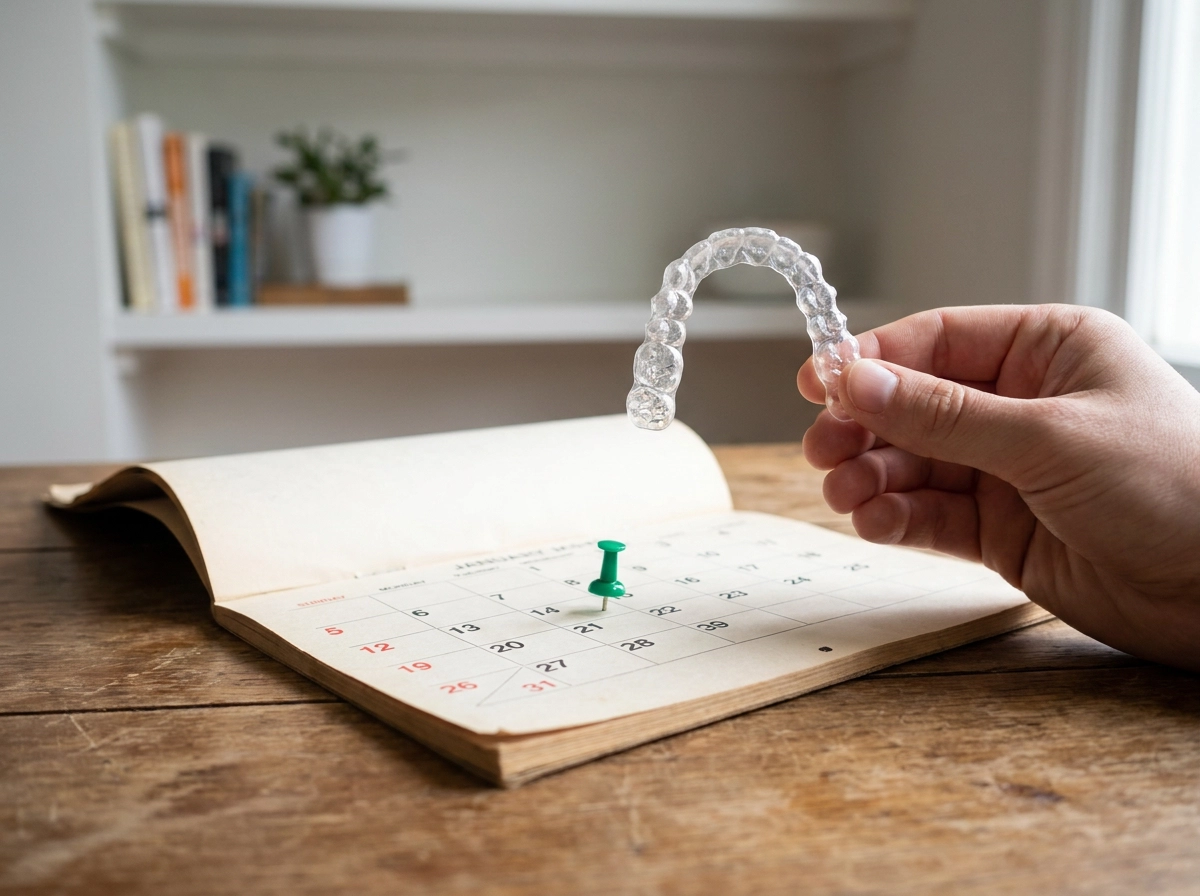
Read more...
Professional header image for step-by-step guide: How to Tell If You Need a Root Canal (and Why Waiting Hurts)

How to Tell If You Need a Root Canal (and Why Waiting Hurts)

Tooth pain can make every decision feel urgent. Is it something you can mention at your next cleaning, or is it a sign you should call the dentist tomorrow? If you are wondering how to know if i need a root canal, pay attention to patterns, not just how bad the ache feels. Pain that lingers after heat or cold, throbbing that wakes you up, pain when you bite down, or a pimple on the gum usually means the nerve inside the tooth is involved. That does not always mean a root canal, but the tooth deserves a real diagnosis.

Here, we will walk through why it is so hard to tell, what is happening inside a hurting tooth, and each warning sign. You will learn to sort a 'call tomorrow morning' tooth from a 'this is becoming an emergency' tooth, why waiting usually makes things worse, what a dentist checks, and how to get seen quickly around Pike Creek. We will also cover what to do if root canal treatment makes you nervous. The takeaway: lingering pain is worth a call, and the sooner a problem is caught, the better the chance the tooth can be saved.

Why It Is So Hard to Tell If You Need a Root Canal

Tooth pain is not one thing. It can be a quick twinge at cold water, a dull afternoon ache, or a throbbing that keeps you awake, and the same feeling can mean different things in different teeth.

A tooth also has only one way to tell you something is wrong. Its nerves send a pain signal no matter what is irritating them, so the message rarely arrives with a label.

No single symptom settles it. Dentists treat diagnosis like a jigsaw puzzle, fitting your story, how the tooth responds to testing, and what imaging shows. One piece alone is not enough.

So the better question is not "do I need a root canal?" It is "is this a call-tomorrow-morning tooth or a this-is-getting-urgent tooth?" You can start answering that today.

About 1 in 4 adults aged 20 to 64 has at least one untreated cavity, per CDC estimates cited by the Cleveland Clinic. We see Pike Creek, Hockessin and Newark patients every week who waited, not from carelessness, but because they did not want bad news.

Pike Creek Dental

What Is Actually Happening Inside a Hurting Tooth

Inside every tooth, the pulp is the soft tissue in the center, holding the nerves and blood vessels that keep it alive. When it becomes inflamed, we call that pulpitis, which simply means inflammation of the pulp.

Most trouble starts small: a cavity that quietly deepens, a hairline crack, an older filling that has worn or loosened, or heavy clenching and grinding.

Once bacteria or irritation reach it, the pulp swells. Sealed inside a hard shell, it has no room to expand, so pressure builds against the nerves. That pressure is the throbbing.

Pulp inflammation comes in stages, and the stage is what matters. Early on, sometimes called reversible pulpitis, the tooth can calm down and recover if we repair and seal it with a filling. Later, in what we call irreversible pulpitis, it can no longer heal itself. The pulp eventually dies; without treatment, infection can spread past the root tip into the bone. That is the fork in the road.

Dentists describe pulp disease as dynamic and progressive, and that is why a dental emergency tends to keep getting worse rather than settle down.

Pain That Lingers After Heat or Cold

If ice cream brings a quick twinge that vanishes almost immediately, that is usually just surface sensitivity. Receding gums and worn fillings often expose the softer part of the tooth, and brief cold sensitivity in that situation is common and rarely serious.

The pattern to watch is different. Pain that hangs on after the cold or heat is gone, or that starts up on its own with no trigger at all, points toward the nerve being involved. Lingering heat can be especially telling, since it tends to show up when inflammation inside the tooth is further along.

We do not use ten-second rules. There is no reliable stopwatch number for a root canal, and the pattern matters far more than the clock. If hot or cold drinks now make you wince when they never used to, that change is worth a phone call.

Throbbing Pain That Wakes You Up

Throbbing pain that wakes you up is a step beyond lingering sensitivity. When the nerve itself is irritated, not just the surface of the tooth, sleep is often the first thing it interrupts.

Lying down usually makes it worse, because more blood flows to your head when you are flat, and pressure inside the tooth builds with it. Waking up with a sore jaw or neck often means clenching, which can keep that nerve irritated.

Pain that is hard to pin on one tooth, or that seems to move around, still deserves a look. Inflamed nerves do not always point neatly to their source.

Over-the-counter pain relievers may take the edge off, but they do not treat the cause, and they can mask a problem that is still getting worse underneath.

Write down the pattern: when it starts, what sets it off, how long it lasts, what helps. That history is half the diagnosis, and it costs nothing to gather.

Pain When You Bite Down

Biting pain is the next clue worth reading. When chewing hurts, inflammation has usually moved past the pulp into the tissues around the root tip. It can feel like that tooth sits high, hits first, or aches like a bruise deep in the jaw when you tap it.

Biting pain also comes from a cracked tooth, a failed filling, or even sinus pressure, which is exactly why a hands-on exam tells you more than a web search. Cracks in particular are famously hard to pin down from symptoms alone.

If biting on one specific tooth has become reliably painful, that tooth is asking for a look.

A Pimple on the Gum

Sometimes the clue is not pain at all. A small bump on the gum near a tooth root is often a sinus tract, which is a tunnel the body builds to drain infection out of the bone.

It may come and go, and it may not hurt at all, which is exactly why it gets ignored for months. When it drains, the pressure eases and the tooth can feel better for a while. The source inside the tooth is still there, and it keeps working.

A gum pimple is a sign the infection has moved beyond the pulp. This is the root canal and infections picture people search for late at night, and it is the stage where an exam helps most.

Any bump on the gum that persists, drains, or leaves a bad taste deserves an appointment, not another week of waiting. Not every symptom carries the same urgency, though.

Call Tomorrow Morning vs. This Is Getting Urgent

Beyond the gum bump, here is how to triage:

Call tomorrow morning: hot or cold sensitivity that lingers, an ache that comes and goes, biting pain in one tooth, a gum bump without swelling, or a tooth that feels off.

Call today or use our emergency dental care for steadily worsening pain, throbbing that kept you up two nights, swelling starting in the gum or cheek, or pain over-the-counter medicine does not touch.

Go to the emergency room for facial swelling with fever, swelling toward your eye or neck, or trouble breathing or swallowing. Those are medical emergencies, not dental ones.

Not sure? Call or book online anyway. We would rather tell you it can wait than have you spend a night in pain. Our Wilmington-area office keeps Monday and Tuesday hours until 8pm and Friday from 7am, so tomorrow morning can mean tomorrow morning. Cost depends on your treatment and plan; affordable options like CareCredit and Cherry can help.

Why Waiting Usually Makes It Worse

Waiting feels reasonable. Here is the risk.

Early on, the problem can sit in the reversible stage. A filling that seals the tooth lets the pulp calm down and recover, the least involved outcome available.

Once it becomes irreversible, the tooth cannot heal itself. Your options narrow to root canal treatment to save it, or losing it and discussing replacement.

The pulp can also die quietly, a stage called pulp necrosis. The pain may fade, and people assume they are fine. That quiet is not healing; it is infection moving into the bone.

Swelling, an abscess, or bone loss around the root tip makes treatment more involved than it would have been weeks earlier, and can make the tooth harder to save.

Teeth caught while the nerve is only inflamed are far more likely to be saved than teeth left until swelling starts. That gap is the argument for calling early.

Cost and time usually grow with the problem. A straightforward repair is easier on your schedule and your budget than a tooth that has been brewing for months.

What a Dentist Actually Checks

It starts with your story: when the pain began, what sets it off, how long it lasts, whether it wakes you up, and what makes it better.

Then we test the tooth rather than just look at it. A cold test, sometimes a gentle electric pulp test, and a warm test show how the nerve responds, and whether that response fades quickly or lingers.

We press and tap around the root and ask you to bite on something small. That tells us whether inflammation has moved past the pulp.

Imaging fills in the rest. We use x-rays and, when the picture is unclear, a CBCT 3D scan, which shows the tooth and surrounding bone from every angle without guesswork.

We look at the neighbors, too. A cracked tooth, a deep old filling, or sinus pressure can imitate nerve pain, and treating the wrong tooth helps nobody.

That is why diagnosis takes more than one clue. An exam tells you what is going on instead of leaving you to guess from a symptom list.

If You Feel Nervous About Canal Root Treatment

If the exam confirms the nerve is involved, feeling uneasy is normal. Many of our patients in Greenville and Landenberg have said the same thing, and many told us afterward that the visit was calmer than they expected.

Modern canal root treatment is usually done with numbing and often takes one or two visits, depending on the tooth and how much infection is present. In some cases we use the Biolase Waterlase laser, and CBCT imaging helps us plan so treatment stays efficient and predictable.

Research comparing one-visit and two-visit treatment for inflamed nerves, including a study of 130 patients, found both can work well. The right choice depends on your tooth.

Ask us anything: what it will feel like, how long it takes, what it costs. Cost depends on the treatment and your plan, and we give estimates before treatment starts. CareCredit and Cherry financing are available if you would like to spread payments. Dr. Myochul Kwon, Dr. Nick Faure, Dr. Whitney Kehrer and Dr. Suraj Patel will walk you through your options at your pace, with no pressure.

How to Get Seen Quickly Around Pike Creek

When you are ready, getting seen is the easy part. Call us at 302-239-0410 or book your appointment online. If you are in pain, say so when you call, and we will look for the earliest opening. That includes same-day and emergency dental care. We also keep early and evening hours: Monday and Tuesday until 8 p.m., and Friday from 7 a.m.

Pike Creek Dental has cared for families in Pike Creek, Hockessin, Newark, Greenville and nearby Landenberg, PA for more than 45 years, often across several generations. Our Wilmington office is in-network with most major dental insurance plans, and you get a written estimate before treatment, so nothing shows up as a surprise. New patients are always welcome, including anyone who feels anxious about dental visits. Our doctors take time to know you and explain options clearly.

One last thing: bring your notes on timing, triggers and what helps. That small bit of homework makes your exam faster and your answers clearer.

The Takeaway: Pain That Lingers Is Worth a Call

Lingering pain after heat or cold, throbbing that wakes you up, pain when you bite, or a pimple on the gum usually means the nerve inside the tooth is involved.

That does not automatically mean you need a root canal. It means the tooth is worth an exam, because early problems are simpler to handle than late ones.

Waiting rarely helps. Reversible inflammation can settle with a repair. Once the pulp can no longer heal, the tooth can only be saved with treatment or lost, and replacement options like dental implants in Wilmington, DE enter the conversation.

Take the next step today: call 302-239-0410 or book your visit. If you have facial swelling with fever, or trouble breathing or swallowing, go to the emergency room.

This article is educational only, not a diagnosis. Your dentist can give you advice specific to your tooth after an exam.

Conclusion

Lingering sensitivity after heat or cold, throbbing pain that wakes you up, discomfort when biting, and a pimple on the gum are signals that a tooth's nerve may be involved. They do not confirm a root canal, but they do deserve a prompt exam. Waiting often turns a simple repair into a more complex problem, or even tooth loss. That is why timing, triggers, and what helps are worth noting before your visit. You have learned what to watch for, what a dentist checks, and why early action protects your smile. If these symptoms sound familiar, call 302-239-0410 or book your visit today. If you have facial swelling with fever or trouble breathing, go to the emergency room. A calm, clear conversation now can save you pain and preserve your tooth.

Read more...
Professional header image for comparison analysis: Missing Tooth? Compare Bridges, Dentures and Implants

Missing Tooth? Compare Bridges, Dentures and Implants

A missing tooth is not just a gap in your smile. It is a daily question: what do I do now? If you are weighing a replacement tooth, you have likely heard about bridges, dentures, and implants. Each path has real trade-offs, and the right choice depends on which teeth are missing and what you are realistically willing to maintain.

This guide compares all three side by side instead of pushing one option. We will start with the three ways to replace a missing tooth in plain terms. Then we will look at the teeth next door, bone preservation in your jaw, daily upkeep, and time in the dentist's chair. You will also learn how to read longevity numbers carefully, compare costs and insurance fairly, and see why the location of the missing tooth changes the answer. We will finish with a simple decision framework, where implants and crowns fit in, what an exam adds, and your next step toward replacing that tooth.

Three Ways to Replace a Missing Tooth, in Plain Terms

"Replacement tooth" can mean three very different experiences and three very different commitments.

A bridge is a fixed row of crowns cemented onto the teeth on either side of the gap, so the missing tooth is held in place by its neighbors.

A denture is removable. A partial denture fills part of an arch; a full denture replaces all teeth in an arch. Both are removable.

An implant is a small post placed in the jawbone and topped with a crown. Nothing attaches to the neighboring teeth.

Notice that "crown" appears in all three conversations. That is why so many people search for dental implants and crowns together, even while still comparing options.

Crowns, bridges and implant restorations all fall under restorative dentistry, and if the gap is near the front, appearance matters too, so cosmetic dentistry often joins the plan.

Next, let's look at what each option asks of the teeth next door.

Trade-Off 1: What Happens to the Teeth Next Door

Now the part that surprises people most: a bridge is rarely a solo project. A traditional bridge holds the replacement tooth in place with crowns that fit over the natural teeth on either side of the gap. Those neighbors are often perfectly healthy, which is the hardest part for patients to hear.

An implant leaves them completely untouched, which matters a great deal if those teeth have never had a filling or a crown.

A partial denture rests on and engages nearby teeth to stay in place.

Some bridges use a resin-bonded design that preserves more tooth structure; your dentist will assess whether that design suits your bite.

So ask which teeth you would be committing for the long term, not just which option looks best in a photo of a finished smile.

Trade-Off 2: Bone Preservation and Your Jaw Over Time

Then there's the bone itself.

After a tooth is lost, bone changes can occur in that area. Dentists call this resorption. It's expected, not a sign you did something wrong.

Options differ in how they interact with the bone beneath the gap; your dentist can explain what imaging shows about your ridge before recommending a path. Ridge changes over time can affect how a denture fits.

Bone quality also decides whether an implant is possible. That's why the dental implant process here starts with a three dimensional scan, called CBCT, at our Wilmington office rather than a two dimensional X-ray.

Trade-Off 3: Daily Upkeep and Long-Term Maintenance

Upkeep matters.

Bridges: Clean under the bridge daily with a floss threader or interdental brush. The supporting teeth still get decay and gum disease like any other tooth.

Dentures: Daily cleaning is essential, as is returning for periodic adjustments as your mouth changes.

Implants: Clean around the crown and gum line like a natural tooth, and keep your hygiene visits. The crown can still wear, chip or loosen. Older evidence, labeled as historical: a 2000 systematic review reported roughly 83% of implant crowns stayed free of complications at four years. The authors called crown complications common, worth knowing before assuming the implant ends the story.

Whatever you choose, gum health drives longevity. Our Total Health Dentistry approach treats gum inflammation as part of whole body health, not a separate chore. If budgeting for upkeep feels tight, see how Pike Creek Dental patients keep care affordable when insurance costs rise.

Trade-Off 4: Time in the Chair and Number of Visits

Upkeep is one kind of commitment; time is another. A bridge typically requires fewer visits than an implant; a denture involves multiple fittings and adjustments. An implant is the longest path, placement, healing and crown placement are separate stages.

The right sequence depends on your situation.

Ask how many visits you can realistically attend around work, travel or caregiving. We keep early and evening hours on Monday and Tuesday and open at 7am Friday to make that easier.

Next, we will look at longevity and why those numbers need careful reading.

What We Know About Longevity, and Why the Numbers Need Careful Reading

Time in the chair matters, but so does how long the work lasts, and the percentages you see online deserve a second look.

Older dental literature put bridgework for a single missing tooth at roughly 75% survival after 15 years, a figure the same 2000 review borrowed from earlier sources rather than fresh data.

The same 2000 review's implant survival data, noted in the upkeep section above, tells only part of the story, four-year outcomes for implants differ substantially from fifteen-year outcomes for bridges.

Read those side by side and you might crown a winner. Don't. One covers four years, the other fifteen, and they come from different studies. Short term versus long term is the honest framing.

That review's evidence window closed in 1998. Implant surfaces, CBCT planning and digital scanning have all changed since. Ask us what to expect today rather than trusting a 25 year old number.

Cost, Insurance and Financing: How to Compare Fairly

The same caution applies to price. What you pay depends on the treatment and your specific dental plan, so anyone quoting one flat number for all three options is oversimplifying your situation.

Upfront costs and long-term costs differ for each option; plan design, not a single flat price, governs what you actually pay.

We are in network with most major dental insurance plans, and we give you an estimate before treatment starts, so there are no surprises on the day.

If spreading payments over time makes the decision easier to make now rather than later, CareCredit and Cherry financing are available.

Cost is one column of this comparison, not the whole spreadsheet.

Which Teeth Are Missing? Why Location Changes the Answer

Now that the cost picture is clearer, here is the question that quietly decides more than any price tag: where is the gap?

Front teeth are highly visible and affect speech, so aesthetics and shade matching take on more weight. Back teeth bear heavy chewing load, which influences whether something fixed is preferred. Several teeth missing in a row? A bridge or partial denture can cover that span efficiently, sometimes with fewer implants than one per tooth. If most teeth in an arch are gone, a full denture or an implant-supported option often makes more sense than patching one gap at a time. The condition of neighboring teeth is also a genuine clinical consideration our doctors weigh when recommending a path forward.

What Are You Realistically Willing to Maintain?

Location narrows the list; your daily habits decide which option actually lasts.

A denture that spends its evenings in a drawer is not solving anything. A bridge needs cleaning under it every day, no skipping. The implant path asks more of your calendar and your patience, with appointments spread across months of healing. Flossing under a bridge or around nearby teeth takes steady hands and decent light. A floss threader helps, but it takes practice.

Your health history, including smoking, uncontrolled diabetes and active gum disease, shapes which option is realistic and how healing goes.

Worried about the dentist? Anxious patients do well in our Wilmington office. Our doctors explain each step before it happens, and you set the pace, whether you visit us from Pike Creek, Hockessin, Newark or Greenville.

Bring that honesty to your exam, and the decision gets much simpler.

A Simple Decision Framework: Matching Options to Situations

Once you know what you're willing to maintain, the choice often sorts itself out. Most situations land in one of these buckets:

  • One gap, healthy neighbors: an implant avoids touching those neighbors, which is often the strongest argument in its favor.
  • Neighbors already heavily restored, or you want fewer visits and a fixed result: a bridge can be a sensible, predictable choice.
  • Several missing teeth, a limited budget, or a medical reason surgery isn't wise: a partial or full denture may serve you well for years.
  • Bone too thin in the gap: grafting may be discussed, or a bridge or denture becomes the more practical route.
  • Mixed cases: a bridge on one side and an implant on the other is a normal plan, not a compromise.

There's no single right answer. If an implant is on your list, it helps to understand its two parts.

Dental Implants and Crowns: Where They Fit in This Comparison

Once you have a rough sense of which option fits your situation, here is the part of the implant path patients ask about most.

The implant post is placed in the bone; a crown is then cemented or screwed on top. Crowns for dental implants are shaped and shaded to match your other teeth. That crown is the part you see and chew with, and over years of use it can wear, chip or need replacing.

Planning uses 3Shape TRIOS digital scanning and 3D imaging, so we can show you the intended position before treatment begins.

Which is why an implant is not simply a replacement tooth. It is a system, with a maintenance schedule attached.

What an Exam Adds That an Article Cannot

That maintenance schedule starts with an exam, not a web page. We check the teeth on both sides of the gap, the gum tissue, and the bone beneath it before recommending anything. CBCT 3D imaging shows bone height and width, while digital scanning captures your bite without putty trays. DIAGNODENT cavity detection helps us find decay early in teeth that would support a bridge, so we are not building on a weak foundation.

Your health history, medications and habits shape which option is realistic for you. That is a conversation, not a checklist.

If you are in pain or have a broken tooth, call the office at 302-239-0410, or read about our emergency dental care. If you have facial swelling with fever, or trouble breathing or swallowing, go to the emergency room.

Pike Creek Dental

Your Next Step Toward Replacing That Tooth

An exam answers what your mouth needs. The next question is what you want. Bring your questions to a dentist who will walk through the trade-offs with you instead of steering you toward one answer.

Our team has cared for local families for more than 45 years, in Pike Creek, Hockessin, Newark, Greenville and nearby Landenberg, PA. About Pike Creek Dental: we are a neighborhood practice, and our doctors take time to explain options clearly.

Dr. Myochul Kwon, Dr. Nick Faure, Dr. Whitney Kehrer and Dr. Suraj Patel can examine the gap, explain what each option asks of you, and give you an estimate before treatment begins. Call 302-239-0410 or book your appointment online. We are at 4901 Limestone Road in Wilmington, Delaware 19808; our contact page has directions.

Conclusion

Choosing between a bridge, denture and implant is not about finding one universal winner. It is about matching key factors to your life: what happens to neighboring teeth, how each option affects jaw bone over time, how much upkeep you accept, and how many visits and costs fit your budget. Tooth location and health history matter too, which is why an exam adds clarity no article can.

Call 302-239-0410 or book online, your next step starts with a conversation, not a commitment.

Read more...
Professional header image for comparison analysis: Veneers, Bonding or Whitening: Which Fix Fits Your Smile?

Veneers, Bonding or Whitening: Which Fix Fits Your Smile?

Your smile probably isn't asking for a treatment. It's asking you to fix something specific. Maybe your teeth look yellow or grey. Maybe there's a chip on a front tooth. Maybe a gap bothers you, or the shape just doesn't feel like yours. That's exactly where cosmetic dentistry should start: with your complaint, not a menu of services. Whitening changes colour. Bonding repairs small chips and can close minor gaps. Veneers rebuild shape and shade together. Pick the wrong one and you can waste money, and with veneers you may remove healthy tooth structure you never needed to touch.

In this post, we'll sort the three options by what you actually see in the mirror. We'll cover four common complaints: staining, chips or worn edges, gaps, and the wrong shape or shape plus shade. Then we'll compare them side by side, talk about reversibility, lifespan, upkeep, who should do the work, cost, and your next step. By the end, you'll know which questions to ask and which option to rule in or out before you call.

Why We Start With Your Complaint, Not Our Menu

Pike Creek Dental

Most cosmetic dentistry pages open with a service menu. The more useful question is the one you arrived with: what bothers you about your smile? Cleveland Clinic groups cosmetic dentistry by patient complaint rather than by procedure, so that is how we will walk through it: color, chips, gaps and shape.

Short version: whitening changes color only, bonding repairs small chips and closes minor gaps, and veneers rebuild shape and shade together. Getting the match wrong costs more than money. Whitening will not fix a chip, and veneers on a color-only complaint remove healthy tooth structure that did not need to go.

If you prefer to see cosmetic dentistry options in motion, our videos cover the basics in a few minutes.

This is educational, not a diagnosis. A short exam is what turns a general answer into one that fits your teeth, which is how Pike Creek Dental has advised families in Pike Creek, Hockessin, Newark and Greenville, DE for more than 45 years.

We will start with color.

Complaint One: Your Teeth Are Yellow, Grey or Stained

Color is the complaint whitening was built for.

Whitening is a chemical process. It lightens color and nothing else, not shape, size or position. The bleaches are hydrogen peroxide or carbamide peroxide, which break stains into smaller pieces so the color is less concentrated.

Stain type predicts your result. Yellow teeth usually bleach well. Brown teeth may respond less well. Gray-toned teeth may not bleach at all.

Two limits matter here. Only natural teeth can be whitened, so caps, veneers, crowns and fillings keep their original shade. Whitening is also ineffective when discoloration comes from medication or an old tooth injury.

That is why we screen causes first: coffee, tea, red wine, tobacco, age-related enamel thinning that reveals the yellower dentin underneath, trauma, some medications, childhood tetracycline or doxycycline, and chemotherapy or head and neck radiation.

If you are searching for the best teeth whitening, the safest answer is the dentist-supervised version. We offer in-office and take-home. Expect some sensitivity and gum irritation. Newer research also flags surface roughening and softening, demineralization potential, and unwanted color change in existing restorations. Whitening remains safe and effective when the protocol is followed.

Demand is high: whiter teeth topped the list of smile improvements in AACD survey findings, and nearly 90% of patients in one orthodontic survey asked for whitening. High demand is exactly why fit matters more than popularity. A gray front tooth and a coffee-yellow smile are not the same problem.

Complaint Two: A Chip, a Crack or a Worn Edge

Color is one problem. A broken edge is a different one, and whitening cannot fix it.

Bonding, sometimes called direct bonding, uses a tooth-colored material to repair small chips, cracks and worn edges. "Direct" means the material is shaped and set right on the tooth, so there is no lab work and no temporary crown while you wait.

Because bonding is additive, nothing comes off the tooth. It can be added to, polished or replaced later, which makes it a low-stakes first try. The trade-off: composite stains and chips more easily than porcelain, so expect several years before a refresh.

A large chip, a deep crack, or a tooth already weakened by a big filling may need a veneer or a crown instead. That is a judgment an exam makes, not a guess. If a tooth has broken and you are in pain, call our emergency dental care line at 302-239-0410. For facial swelling with fever, or trouble breathing or swallowing, go to the emergency room.

Complaint Three: A Gap or Space Between Teeth

A chip is about broken edges. A gap is about position. A gap between your teeth, which dentists call a diastema, can often be closed with bonding in a single visit by adding tooth-colored material to the edges of the neighboring teeth.

Whitening does nothing for a gap. It only changes color.

For larger spaces or crowding, moving the teeth may be the better answer. We offer clear aligners and adult cosmetic orthodontics, including Invisalign, ClearCorrect and Six Month Smiles.

Veneers can close small spaces by widening the teeth, but when spacing is your only complaint, that can be more treatment than the problem needs. Ask whether orthodontics would serve you better.

The right choice depends on how wide the gap is, how your bite sits, and how the neighboring teeth look. A gap that is new or changing size deserves a closer look, since gum disease can sit behind it.

Complaint Four: The Shape Is Wrong, or Shape and Shade Together

Spacing was one thing. When the shape itself is the complaint, or shape and shade need to change together, that is where porcelain veneers earn their place.

A veneer is a thin shell of porcelain or composite bonded over the front of a tooth to change its color or shape. Veneers suit teeth that are uneven, chipped, discolored, oddly shaped, unevenly spaced or crooked, and teeth with large fillings. They can solve some of the same problems as bonding and crowns.

Here is the trade-off. Veneers are permanent, and treatment is not reversible. A small amount of healthy enamel is removed to make room for the shell, and enamel does not grow back. That is why a shape complaint deserves a slower conversation than a color complaint.

Composite veneers are a less permanent alternative, so ask about them. To compare veneers against bonding and crowns, our restorative dentistry page walks through the options.

Next, we will set all three side by side.

The Three Options Side by Side

So you now have all four complaints mapped. Here is the short version, side by side.

  • Whitening changes color only. Shape stays exactly as it is. It is repeatable, and it does not disturb crowns, veneers or fillings (though it will not lighten them either).
  • Bonding changes color and shape a little. It repairs small chips and minor gaps, adds material without removing any, usually takes one visit, and lasts several years with some risk of staining or chipping.
  • Veneers change color and shape together. They are permanent, remove a small amount of healthy enamel, and look the most durable on shape problems.

All three are cosmetic dentistry procedures. None of them replaces a cleaning, a checkup, or treatment for an underlying issue like decay or gum inflammation.

Read this as a screening tool, not a verdict. When two options would fix the same complaint, the more reversible one is usually worth trying first.

Reversibility: The Question Most Pages Skip

Here is the question that decides more cases than any other, and it is not about cost or color: can it be undone?

Whitening is additive and repeatable. It fades if you stop, and it never alters the tooth itself, which makes it a low-stakes first try.

Bonding is additive too. It can be polished, added to, or replaced, and the enamel underneath stays intact. Nothing is lost by giving it a chance.

Veneers are permanent. Once enamel is removed to seat the shell, that tooth will always need a covering of some kind. There is no going back to the tooth you started with.

That is why reversibility is worth asking about before anything else. It is the line between a low-stakes experiment and a decision you live with, so raise it at your exam even if you already think you know which option you want.

Next, how long each one lasts and what keeping it up actually looks like.

How Long Each Option Lasts and What Keeping It Up Looks Like

Reversibility is about what you can undo. Longevity is about what you'll be keeping up, so here's the honest timeline for each.

Whitening fades over months to years, depending on coffee, tea, red wine and tobacco. Occasional touch-ups keep it where you want it. How long whitening holds is still an active area of research.

Bonding typically lasts several years. It may pick up stain faster than the tooth around it, and it can be polished, refreshed or replaced when it does.

Veneers last a long time, but not forever. They still need regular cleanings and checkups, and they can chip or need replacing eventually.

One practical note worth remembering: whitening will not lighten a veneer, crown or filling. If you whiten later, your natural teeth can pass your restorations in shade. If you're planning whitening and restorations together, we usually sequence them so the shades still match at the end. Sequence matters, and it's easier to plan before treatment starts than after.

Choosing Who Does the Work: Three Questions to Ask Anywhere

Once you know how long each option lasts, the next question is who should do it. Cosmetic dentistry is credentialing-driven, and accreditation is one visible signal. The American Academy of Cosmetic Dentistry keeps a public Find A Dentist directory, which is a reasonable place to start looking.

Ask any dentist three things: before-and-after photos of their own work, references from patients, and proof of continuing education in cosmetic procedures. The answers should come easily.

Ours is on the record. More than 45 years in Wilmington, four dentists, and a stated habit of explaining options before recommending one. We use 3Shape TRIOS digital scanning and CBCT 3D imaging, so you can see the plan before treatment starts, much like we walk through what getting a dental implant in Wilmington actually looks like.

We are not a high-volume office, and we do not try to be. Dr. Myochul Kwon, Dr. Nick Faure, Dr. Whitney Kehrer and Dr. Suraj Patel take time with each patient, which matters most when a decision is permanent.

What It Costs and How We Make It Manageable

Cost depends on the treatment and on your plan. Cosmetic work is often not covered by insurance, because plans tend to draw the line at routine and restorative care. The rest of your care may still be covered, so we check your benefits before anything is scheduled.

You get an estimate before treatment starts, so there are no surprises.

We are in-network with most major dental insurance plans. If you would rather spread the cost, CareCredit and Cherry financing are available, which is how many local families keep care affordable when insurance costs rise.

We do not quote fees here, because the honest answer depends on your teeth, your plan and the option you choose. Two people with the same chip can land on different numbers. The exam is where yours gets real.

Your Next Step: Let an Exam Confirm It

If cost is the last practical question, this is the last clinical one: which option actually fits.

If color is your only complaint, whitening is usually the first thing to try, and it is the most reversible. For a small chip or a minor gap, bonding is often enough in a single visit, and it does not touch healthy enamel. If shape is the problem, or shape and shade together, veneers rebuild both. Because veneers are permanent, that decision deserves to go the slowest.

Whatever you think you need, an exam is what confirms it.

Book at pikecreekdental.com/appointments or call 302-239-0410. We keep early and evening hours, Monday and Tuesday until 8pm and Friday from 7am, and new patients are always welcome. Families come to us from Pike Creek, Hockessin, Newark and Greenville, and we are glad to see you too.

For a dental emergency, call the office. For facial swelling with fever, or trouble breathing or swallowing, go to the emergency room.

Conclusion

Your smile complaint should lead the decision, not a menu. If color is the issue, whitening is usually first and most reversible. For a small chip or gap, bonding can often solve it in one visit without touching healthy enamel. If shape or shape and shade need rebuilding, veneers offer the most dramatic change, but they are permanent, so choose carefully. Cost, longevity, and who performs the work matter too.

The only way to know which fix truly fits is an exam. Book at pikecreekdental.com/appointments or call 302-239-0410. You will leave with a plan based on your teeth, your goals, and your budget, not a guess. Take the next step today and let your best smile become the practical, confirmed choice.

Read more...
Professional header image for educational tutorial: Total Health Dentistry: Why We Check Your Gums First

Total Health Dentistry: Why We Check Your Gums First

If you think a dental visit is mostly about counting cavities, Pike Creek Dental starts somewhere else: your gums. That may sound odd at first. But gums are not just the pink tissue around your teeth. When gum inflammation sticks around, it does not stay neatly confined to your mouth. It can reflect and interact with whole-body health, including conditions like heart disease and diabetes, even though researchers are still untangling cause and effect. At Pike Creek Dental, we call our approach Total Health Dentistry. It means we screen, discuss, and treat gum health as part of your overall health, not as a side note. In this post, we'll walk through what that actually changes at a routine visit. You'll learn what Total Health Dentistry means here, why we check gums before teeth, what we measure, how the gum check works step by step, how your health history fits in, what we talk about afterward, and what you do between visits. You'll also see how we aim to be one dental home for Delaware families, what to do if you're nervous, and how cost, scheduling, how often you come back, and your next visit work.

What Total Health Dentistry Means at Pike Creek Dental

At Pike Creek Dental, Total Health Dentistry is a working method, not a slogan. Gum screening and whole-body context are built into every exam the same way a blood pressure check is built into a physical. You never have to ask for it or book separately.

The order is deliberate: we check your gums and the supporting bone before your teeth, because the tissue around a tooth often tells us more than the tooth itself.

That standard holds across our whole practice. Dr. Myochul Kwon, Dr. Nick Faure, Dr. Whitney Kehrer and Dr. Suraj Patel all work this way. Instead of treating one bleeding spot and moving on, we ask what is driving the inflammation and whether something outside your mouth is part of the picture.

The approach also scales with age, from a child's first visit through adult and older-adult care, because the risk factors that shape gum health change over a lifetime. Meet our team on our About Pike Creek Dental page.

By the end of a visit, you should know your numbers, what they mean and what happens next, without decoding clinical language.

Why We Check Your Gums Before Your Teeth

Gum disease is infection and inflammation of the tissues and bone that hold your teeth in place. It starts quietly and can progress without pain, which is why we measure it instead of waiting.

It is also common. Severe periodontitis affects roughly 11 percent of the world's population and is considered one of the most prevalent human diseases, which is why it is treated as a public health concern.

The whole-body link deserves plain honesty. Research points to chronic inflammation in the mouth potentially raising inflammatory markers throughout the body, and to the mouth acting as a possible reservoir for bacteria that reach the bloodstream. Both remain areas of active study, not settled mechanics. Gum disease is associated with heart disease and diabetes, not proven to cause them. Causality remains elusive, and the conditions share risk factors like smoking and poor diet.

That framing is not new. A growing body of evidence links oral health to chronic disease, including cardiovascular disease, stroke, diabetes and adverse pregnancy outcomes, and Healthy People 2020 recognized that oral health is integral to general health.

Research has found associations between periodontal disease and elevated cardiovascular disease risk, higher rates of gum disease in older adults, greater mortality risk among type 2 diabetics with severe periodontitis, and improved blood sugar control in type 2 diabetics after periodontal therapy. Connections with adverse pregnancy outcomes are also an active area of study. These are population-level associations, not predictions about you, and only an exam of your own mouth tells you where you stand.

Recognized risk factors include smoking, poor oral hygiene, diabetes, certain medications, age, heredity and stress.

Cost is a fair worry; our guide to affordable care covers it.

What We Actually Measure at Your Visit

The exam is where that question gets answered, and it starts with numbers. The step-by-step below explains what each measurement tells us. Every reading is charted and compared with your last visit. These are the standard landmarks your dentist or hygienist records to build a complete picture of your gum health, which is why you hear the same measurements described the same way each time.

The Gum Check, Step by Step

Here is what happens, in order, while you sit back.

Probing depths. A slim measuring instrument reads the groove between each tooth and its gum. Shallower readings generally indicate healthier tissue; deeper readings prompt closer review. We track the numbers over time rather than judging a single visit.

Bleeding on probing. A small spot of blood when we measure is one of the clearest signs of active inflammation and often shows up before you notice anything. It is a key way to monitor gum inflammation over time.

Recession. We note how far the gum line has moved down the root, which can expose sensitive areas and change how a tooth responds to brushing.

Mobility. We gently press each tooth to see if it shifts. Movement is a step we include to assess the support around each tooth.

Bone level. X-rays show the bone around your roots. When we need a three-dimensional view of bone and roots before planning treatment, we use our CBCT 3D imaging system.

Our goal is that the exam stays comfortable throughout, gentle pressure, short, and always pausable if you need a moment.

Your Health History Is Part of the Exam

Those numbers only tell part of the story. We also want to know what's happening in the rest of your body, because it shows up in your gums.

Medications first. Heart medications and certain other prescriptions can reduce saliva flow. Less saliva means less natural protection for gums and teeth. Tell us what you take, including supplements.

Diabetes and gum health are closely connected: poor blood sugar control is associated with more severe gum inflammation, and the Nazir review found that periodontal therapy improved blood sugar control in type 2 diabetic patients.

Tobacco and vaping are not a lecture. They affect healing and how your gums respond to treatment, worth mentioning, without judgment.

Life stages matter too. Pregnancy, menopause, and high stress can all change how gums respond. So can family history, which is one of the things we ask about.

We update this at every visit. A new medication or diagnosis can change the plan we recommend. That history is what makes the numbers mean something.

What We Talk About Afterward

Pike Creek Dental

Your health history shapes how we read the gum chart. Then we talk it through.

We explain what the numbers mean instead of reading them aloud and moving on. If you leave without understanding your own gum health, the visit did not do its job.

What we find usually leads to options, not one verdict: watch an area and recheck it, schedule a deeper cleaning, adjust your home care, or talk about seeing a specialist.

No shaming here. Gum inflammation is common and treatable, and lecturing you would only make you less likely to return.

If you feel anxious, we tell you what we are about to do before we do it, agree on a signal that means stop, and never rush you.

You also get a written summary of your findings and next steps, so the plan does not depend on remembering a chairside conversation. Many patients share feedback through our after-appointment survey.

That continuity is why the same doctors see you each visit.

What You Do Between Visits

The written plan only works if the daily routine supports it. Brush daily with fluoride toothpaste, your hygienist will show you the angle and timing that suits your mouth. Clean between your teeth once a day with whatever tool you'll actually use; your hygienist can recommend one.

Then work on what you can influence: blood sugar control, tobacco use and dry mouth. These often matter as much as brushing technique.

Call 302-239-0410 rather than waiting for your next scheduled visit if you notice bleeding when you brush, breath that does not improve, gums pulling away from a tooth, a loose tooth or a shifted bite. Dental emergencies are handled by calling the office; see emergency dental care. For facial swelling with fever, or trouble breathing or swallowing, go to the emergency room.

How Often You Come Back, and Why It May Change

Home care does the daily work, but the cleaning is where we reset the clock. Which cleaning you get depends on your gums.

A prophylaxis is a routine cleaning for healthy, stable gums. Periodontal maintenance is a deeper cleaning schedule for someone with a history of gum disease.

For most patients with healthy, stable gums, we typically schedule a routine cleaning every six months, though we'll adjust that based on what we find. If there is a history of gum disease or ongoing inflammation, we may recommend more frequent visits.

The interval is set by what we measure, not by the calendar alone, and it can move in either direction as your gums change. Your dental insurance may cover a different frequency than the one we recommend. One honest point: the cleaning is a reset, and coming back on time is what protects the result.

One Dental Home for Delaware Families

Coming back on time gets easier when the whole household is on the same schedule. That continuity is what family dentistry looks like here. Children start at their first visit, working adults come on lunch breaks, and grandparents keep the same chart they've had for years. We often schedule families back to back so one trip covers everyone.

We've been at 4901 Limestone Road in Wilmington for more than 45 years, caring for families across Pike Creek, Hockessin, Newark, Greenville and nearby Landenberg, Pennsylvania. Many now bring a third generation.

Almost everything stays under one roof: cleanings and exams, children's dentistry, fillings, crowns, bridges, dentures, root canal therapy, implants, whitening, veneers, bonding, clear aligners, adult orthodontics and emergency care. We aren't a high-volume office, so our doctors have time to know you and explain your options clearly. Directions and hours are on our contact page.

Nervous About the Dentist? Say So

If anxiety is why you've been putting this off, say so. Tell us when you book, not once you're already in the chair, so we can shape the appointment around your comfort from the first minute. Our patient communication page shows how we keep you informed at every step.

Start with the exam and the conversation, and decide about treatment later. Knowing what's going on usually lowers anxiety most.

Ask about options that make some treatment quieter and less invasive, like the Biolase Waterlase dental laser and modern numbing. No one can promise a pain-free visit, but we'll tell you honestly what to expect.

Use breaks and agree on a stop signal. Shorter visits scheduled more often are a legitimate plan, not a compromise.

If mornings or work schedules are the barrier, we're open Monday and Tuesday until 8pm and Friday from 7am.

Cost, Scheduling and Your Next Step

Whenever you're ready, the next step is simple.

Cost depends on the treatment and your plan, so we give you an estimate before treatment begins rather than after. We're in-network with most major dental insurance plans, and CareCredit and Cherry financing are available if spreading payments helps.

New patients are always welcome, including families looking for one trusted dental home in Pike Creek, Hockessin, Newark, Greenville or Wilmington. Book your visit online or call 302-239-0410.

One note: this article is educational only. It isn't a diagnosis and can't replace an exam, which is the only way to get advice about your own gums and teeth.

What Changes at Your Next Visit

Once you know what care costs, the visit itself is the part that changes most. Here is how.

  • Gums first, same measurements, same chart, trended over time.
  • Health history and medications are part of the exam.
  • Plain-language explanation, shared plan.

Ready when you are: call 302-239-0410 or request your appointment online. Dental emergency? Call the office. Facial swelling with fever, or trouble breathing or swallowing? Go to the emergency room.

Conclusion

At Pike Creek Dental, total health dentistry means your gums get checked first, because they often reveal what is happening before tooth symptoms appear. That is proactive, personalised care built around your whole health, not just your teeth. Nervous? Say so, and we will work at your pace. Ready to start? Call 302-239-0410 or book online. Your next visit can be the one that puts your whole health first.

Read more...