

Your First Cleaning at Pike Creek Dental: Step by Step
Your first teeth cleaning should not feel like a mystery. If you are new to Pike Creek Dental, or new to routine dental care altogether, knowing what comes next can turn a nervous appointment into a calm one. A first cleaning here is a structured exam and hygiene visit, not a quick polish. That matters, because this visit sets your personal baseline and shapes everything that follows.
In this step by step guide, we will walk through the whole visit. You will learn why a first cleaning is an exam and a cleaning in one visit, what happens before you sit down, and how the exam and digital scan build your baseline. We will also cover the cleaning itself, what we found and when to come back, cost and insurance basics, and the questions new patients ask most. Our dentists, Dr. Myochul Kwon, Dr. Nick Faure, Dr. Whitney Kehrer and Dr. Suraj Patel, care for patients from Pike Creek, Wilmington, Hockessin, Newark and Greenville, DE.
Ready when you are: call 302-239-0410 or book at pikecreekdental.com/appointments.
Why a First Cleaning Is an Exam and a Cleaning in One Visit
A quick polish is one thing. Your first cleaning here is a full picture.
A maintenance cleaning removes buildup and refreshes your teeth. A first visit is an exam, gum measurements, digital imaging and hygiene in one appointment, which is why it runs longer. You are not being slow-walked. We are building a record.
The cleaning and your home routine share one goal: removing plaque biofilm, the sticky film of bacteria that builds up on teeth. Left alone, it hardens into tartar that only a professional instrument can lift.
Because we have no records for you yet, this visit creates your baseline, the reference point every future visit is compared against. That is how a small change in a gum pocket gets noticed early instead of years later. It also ties into our Total Health Dentistry: Why We Check Your Gums First approach, which treats gum inflammation as part of whole-body health.
If it has been years, hear this plainly: the first visit is information gathering, not a scorecard, and no one will lecture you about the past. Gum inflammation is common, not a personal failure. CDC figures from the 2009 to 2014 NHANES survey found about 42% of US adults 30 and older with teeth had some periodontitis, and 7.8% had severe periodontitis. That is a shared public health picture, and it means we start where you are today.
Before You Sit Down: Scheduling, Check-In and Your Health History
Getting on the schedule is the easy part. Call 302-239-0410 or book your appointment online, and choose a time that fits real life: we’re open Monday and Tuesday until 8pm and Friday from 7am. The office sits at 4901 Limestone Road, Wilmington, DE 19808, a short drive from Pike Creek, Hockessin, Newark and Greenville, and patients come to us from Landenberg, PA as well.
Your new patient paperwork covers medical conditions, medications, surgeries, pregnancy, tobacco use and allergies. None of it is busywork. A heart condition, for example, may mean we discuss antibiotics before certain procedures, and some medications cause dry mouth, which changes how we protect your teeth. Bring a photo ID, your insurance card and a written list of medications and supplements, and arrive about 10 to 15 minutes before your appointment time.
If you feel anxious, say so at check-in. Name the specific worry, whether it’s the sound of the instruments, the syringe or the bill, and we adjust the pace and explain each step before it starts. No lectures, ever.
Money gets settled before treatment, not after. We are in-network with most major dental insurance plans. What you pay depends on the treatment and your plan, so we verify benefits, review them with you and give you an estimate before anything begins. CareCredit and Cherry financing are available for larger treatment plans.
Once you’re checked in, the exam and digital records come next.
The Exam and Digital Scan: Building Your Personal Baseline
Once your history is in the chart, we move to the chair. The dentist starts with a full look: teeth, gums, tongue, cheeks and bite, checking for decay, cracks, worn or loose fillings, and any change in gum color or shape.
Then gum measurements. A slim instrument records the gap between the gum and the tooth, called probing depth. Those numbers get written down so future visits compare against today’s real baseline, not a guess.
Next comes 3Shape TRIOS digital scanning: a small handheld camera builds a 3D picture of your teeth in a few minutes, with no goopy impression trays. That scan helps with aligners, crowns, and tracking change over time. If a missing tooth ever comes up, the same scan data supports a side-by-side look at bridges, dentures and implants.
Other tools are available when needed, not automatic: DIAGNODENT cavity detection, CBCT 3D imaging and the Biolase Waterlase dental laser. Each is used when the exam points to a reason, so a routine cleaning may not involve any of them.
X-rays come after the exam, not before. Low-dose digital images show what eyes cannot, including decay between teeth, bone levels, and problems under old fillings. ADA guidance notes there is no one-size-fits-all interval; a healthy adult often repeats them every 6 to 18 months depending on risk, and we decide that together.
The Cleaning Itself, Step by Step
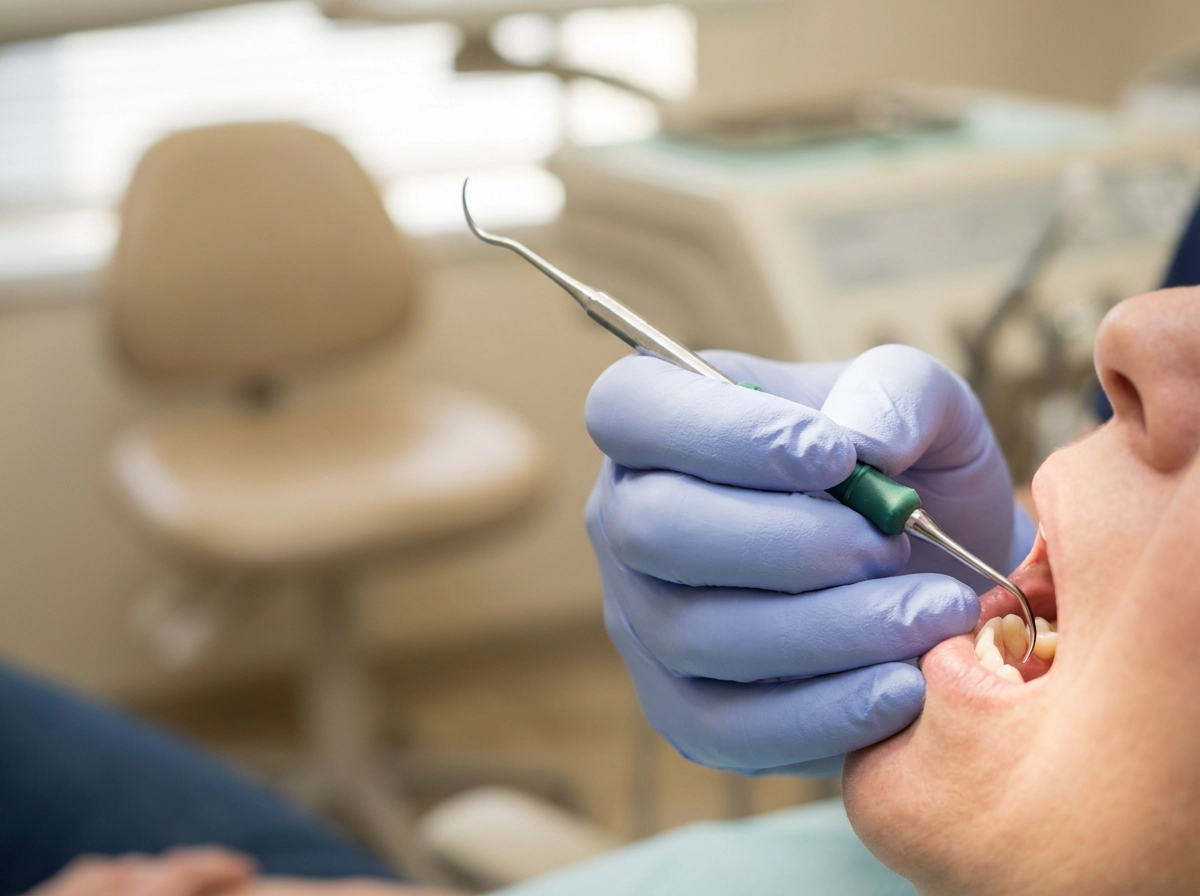
Once your exam and scan are complete, the cleaning starts. It usually moves through three stages, and knowing them ahead of time takes the surprise out of the room.
Hand scaling first. Using a small curved instrument, the hygienist lifts plaque and tartar (hardened plaque) from the tooth surface above the gumline. You will hear a light scraping sound and feel gentle pressure. That is normal, and it does not mean anything is wrong.
Ultrasonic scaling if there is more buildup. A vibrating tip with a water spray and suction loosens deposits quickly. Expect a soft hum, a cool splash of water, and suction keeping your mouth clear.
Polishing and flossing last. A soft rubber cup with a gritty paste smooths the tooth surfaces, then the hygienist flosses between every tooth. This is the part patients usually describe as the smooth, fresh finish.
Sometimes a routine cleaning is not enough. If inflammation is found below the gumline, we may recommend scaling and root planing, a deeper cleaning done with numbing and often scheduled for a separate appointment. Your hygienist explains what was seen before anything is booked, and our post-treatment instructions page covers what to expect afterward.
Worth remembering: gingivitis is reversible with professional biofilm removal plus consistent home care. That is exactly why we talk about your return interval.
A first visit generally runs longer than a maintenance cleaning. Ask when you book how long to plan for and which tools your hygienist expects to use.
Ready for the part where we tell you what we found?
What We Found and When to Come Back
Once your cleaning wraps up, we sit down and talk through what we saw. Your hygienist or dentist pulls up your images and X-rays on the screen beside you and walks through the measurements, so you are looking at the same picture we are rather than taking our word for it.
If gum disease shows up, we explain it with staging and grading: staging says how much has changed, and grading estimates how likely it is to progress. That framework comes from the 2017 World Workshop classification, and it is a planning tool, not a label.
Many adults come back every six months. When gum inflammation or other risk factors are present, three to four months is often suggested. Either way, we decide the schedule together.
You will leave with a small, specific plan. That might mean a tweak to your brushing angle, interdental brushes instead of floss, a night guard if clenching shows up, dry mouth products, or a different routine around braces. Biofilm tends to collect around crowns, bridges, aligners and implants, which is one reason those patients often need closer intervals.
Our Total Health Dentistry approach looks for root causes and treats gum inflammation as part of whole-body health. Research suggests associations with other conditions, though the evidence on cause and effect is mixed.
Most follow-up care happens under this roof: fillings, crowns, bridges, dentures, root canals, implants, whitening, veneers, bonding, clear aligners and emergency dental care. If budget is on your mind, see how our patients keep care affordable.
Cost, Insurance and Making the Next Visit Easy
Once you and your dentist have settled on a plan, the practical questions come next: what will it cost, and when should you come back?
What you pay depends on the treatment and your plan, so we do not quote fees here. We do verify your benefits, review them with you, and give you an estimate before treatment starts. We are in-network with most major dental insurance plans and help with claims. For larger treatment plans, CareCredit and Cherry financing are available.
Scheduling is built around working adults. Monday and Tuesday until 8pm and Friday from 7am mean patients in Wilmington, Pike Creek and Newark can keep appointments without taking time off.
If you have been searching for a teeth cleaning near me and comparing a few offices, ask each one three questions: who performs the exam, how long the first appointment runs, and whether you get a written estimate before treatment. An aching tooth that keeps you up at night is a different situation, and here is how to tell if you need a root canal and why waiting hurts.
For a toothache, swelling or a broken tooth, call the office at 302-239-0410. For facial swelling with fever, or trouble breathing or swallowing, go to the emergency room.
Questions New Patients Ask Before a First Teeth Cleaning
Here’s what else new patients ask.
How long will it take? A first visit runs longer than the maintenance cleanings that follow, because we build records from scratch: health history, gum measurements, digital scans and the cleaning itself. We don’t quote a set time here, so ask when you book.
Will it hurt? Most patients describe pressure and scraping rather than pain. We explain each step before we start, and if you raise a hand, we slow down or pause. We can’t promise a pain-free visit.
What if I haven’t been in five or ten years? No lecture. Your plan comes from today’s measurements, not your history. Gum inflammation is common, so the first step is knowing where things stand. See our First Time Visit Expectations.
Which technology will be used on me? Digital scanning is a normal part of records at our office. DIAGNODENT cavity detection, CBCT 3D imaging and the Waterlase laser are used when the exam calls for them. You can always ask what’s being used and why.
Can the whole family be seen here? Yes. Children’s dentistry starts from the first visit, older adults are welcome, and fillings, crowns, root canals, implants, cosmetic work and clear aligners like Invisalign, ClearCorrect and Six Month Smiles all happen in one office. That helps if you’re searching for teeth cleaning near me for a household, not just yourself.
Ready When You Are: Your First Visit to a Local Dental Home
So that’s the short version of what to expect. The longer version is simple: your first cleaning at Pike Creek Dental is a structured exam plus hygiene visit, not a rushed polish. You leave with a personal baseline, a written plan, and a clear answer on when to come back.
Ready to start? Call 302-239-0410 or book at pikecreekdental.com/appointments. Tell us at booking if you feel anxious or haven’t been in a while, and we’ll pace the visit for you.
We’ve cared for families in Pike Creek, Hockessin, Newark, Greenville and nearby Landenberg, PA for more than 45 years, often across several generations, from 4901 Limestone Road in Wilmington, Delaware.
For a toothache, swelling or a broken tooth, call the office at 302-239-0410. If you have facial swelling with fever, or trouble breathing or swallowing, go to the emergency room. If you’re unsure which situation you’re in, our guide to chipped or knocked out teeth in Wilmington sorts injuries into three simple buckets.
One appointment is all it takes to know exactly where you stand.
Conclusion
Your first cleaning at Pike Creek Dental is more than a polish. It combines a full exam with hygiene care, so you leave with a personal baseline, a written plan, and a clear answer on when to return. You also get time to ask questions, share dental anxiety, and understand costs before treatment. Cost depends on your needs and your insurance plan, and estimates come before treatment, with CareCredit and Cherry financing available if you need them.
If you’re in Pike Creek, Wilmington, Hockessin, Newark, Greenville or nearby, you don’t have to figure it out alone. One appointment can show you exactly where you stand. For a toothache, swelling or a broken tooth, call the office at 302-239-0410. If you have facial swelling with fever, or trouble breathing or swallowing, go to the emergency room. Otherwise, call 302-239-0410 or book at pikecreekdental.com/appointments to take the first step toward a healthier smile.









Leave a Reply